
The Tennessee Split Clerk Structure
Tennessee splits local clerk duties. In Williamson County, three offices share the public-facing clerk work. The Circuit Court Clerk handles Circuit, General Sessions, and Juvenile records. The Clerk and Master is the Chancery Court clerk and handles probate and equity records. The County Clerk handles marriage licenses and other county clerk functions, but not trial-court case files. Each office has its own counter, its own fee schedule, and its own records.
Picking the right clerk at the start saves time. A felony or divorce points to the Circuit Court Clerk. An estate, will, conservatorship, or trust points to the Clerk and Master. A marriage license points to the County Clerk. When the case type is unclear, the safest move is to call and ask before mailing a request.
The Williamson County Circuit Court Clerk Role
The Circuit Court Clerk is more than a records office. The clerk supports day-to-day operations for three courts at once. That means accepting filings, maintaining the case file, collecting fees and litigation taxes, calendaring hearings, issuing process, recording dispositions, and producing certified copies. The clerk also handles cost ledgers, restitution accounting, and bond processing in the cases the office supports.
Because the clerk supports both Circuit and General Sessions, a single criminal case can pass through the same office twice as it moves from preliminary hearing to indictment and trial. The office is the public's main contact point for those case files. Counter access lets parties and attorneys inspect a file in person, while phone and mail requests work for many copy needs.
Records the Circuit Court Clerk Maintains
The Circuit Court Clerk keeps a wide range of files. The list below reflects the typical record types tied to the three courts the office supports.
- Civil complaints, answers, motions, orders, judgments, and service returns.
- Criminal indictments, informations, plea paperwork, judgments, and sentencing orders.
- Domestic-relations pleadings, divorce decrees, parenting plans, and support orders.
- General Sessions civil warrants, detainers, garnishments, and small civil disputes.
- Misdemeanor case records, traffic matters routed through General Sessions, and bench warrants.
- Juvenile records where access is permitted by law and court order.
Juvenile records are restricted, so the clerk treats them differently from adult civil and criminal files. Access for juvenile matters is usually limited to parties, counsel, agencies, or someone with a court order.
Public Records Request Form Fields
Williamson County offers a public-records request process for county records. The fields below come from the county form and apply to administrative records held by the county. Court files follow the clerk's own process, but the same identifying information helps any office find a record fast.
| Field Label | Type | Required | Notes / Format |
|---|---|---|---|
| Name | Text | Likely yes | Requester name. |
| Address, City, State, Zip | Text | Likely yes | Mailing address for response. |
| Phone Number | Text | Varies | Phone contact. |
| Email Address | For electronic reply | Used for an electronic response. | |
| Records Requested | Long text | Yes | Describe the documents in enough detail to identify them. |
| Preferred Delivery | Choice | No | Inspect, paper copy, electronic copy, mail, or pickup. |
For court files, give the clerk the case number, party names, filing year, document name, and copy type. The clearer the request, the faster the response.
How to Request a Certified Copy
A certified copy is a copy the clerk certifies as a true copy of the record on file. Most courts and agencies want certified copies for legal use, while a plain copy is fine for personal reference. The process is simple if you have the right details ready.
- Confirm the case is in Circuit, General Sessions, or Juvenile Court.
- Pull together the party names, filing year, case number, and the document name.
- Decide if you need a plain copy, a certified copy, or an exemplified or authenticated copy.
- Contact the Circuit Court Clerk by phone, in person at the Judicial Center, or by mail.
- Ask for the current fee and the accepted payment methods.
- Provide a return address and a phone or email for any clarification.
- Pay and pick up, or wait for the clerk to mail the certified copy back to you.
Certified copies are usually used for court filings in other cases, for benefits or immigration paperwork, or for any matter where a plain copy will not be accepted.
Fees for Copies and Certifications
Clerks may charge for copies and for the labor to produce them under state law. Williamson County's current Circuit Court Clerk fee schedule was not located in the sources reviewed, so confirm the exact amounts with the office before you pay. The table lists the common fee types rather than invented prices.
| Item | What It Covers |
|---|---|
| Plain copy | An uncertified copy of a page in the file. |
| Certified copy | A clerk-certified copy for legal or official use. |
| Certification fee | The clerk's charge to certify a document. |
| Records search | Possible charge for staff time on archived files. |
Filing fees and litigation taxes are separate from copy fees and depend on the court and the case type. Court costs and fines also live in their own ledger and can stay open after a case closes.
Williamson County Circuit Court Clerk
Williamson County Judicial Center
135 4th Avenue South
Franklin, TN 37064
Ways to Request a Williamson County Court Record
The Circuit Court Clerk accepts requests several ways. Each channel has its own pace and its own paperwork. Choose the one that matches your need, and have your identifiers ready before you start.
- In person - visit the Circuit Court Clerk counter at the Judicial Center in downtown Franklin during office hours.
- By phone - call to confirm a case is in this office, get a current copy fee, or ask about a hearing date.
- By mail - send a written request with case number, names, filing year, and the document needed; include a return address and payment instructions.
- By attorney or party access - parties and counsel may have additional access through the case-management system or e-filing.
For mailed requests, include enough detail for the clerk to find the file without follow-up calls. Older cases may be paper, microfilmed, or archived, so allow extra time for retrieval. Some files may also be sealed or expunged, and the clerk cannot release those without an order.
Walk-in counter access is usually the fastest path for inspection. Bring photo ID. Tennessee court employees can give procedural information and explain a code on the docket, but they cannot give legal advice or tell a person what to file.
E-Filing and Clerk Access
Tennessee offers a statewide e-filing system through Tybera. The system is used by attorneys and other authorized filers to submit documents electronically. It is not a public docket search portal, and registration is required. Filing fees and accepted document formats follow the platform rules.
For nonparties looking for case information, the clerk is still the primary contact. E-filing handles the document side of filings, but record access for the public still moves through the clerk's office and the court-record rules. The court records page explains the full request path, and the court dockets page covers how to confirm a hearing date. Self-represented parties sometimes feel rushed at the counter; the clerk is busy, but a clear question and the right case number usually keep things short.
Federal Court Clerks for Context
State and federal courts use separate clerks. A case that arises in Williamson County can sit in state court or federal court depending on the law and the parties. Federal clerks are not connected to the Williamson County Circuit Court Clerk and have their own filing and copy processes.
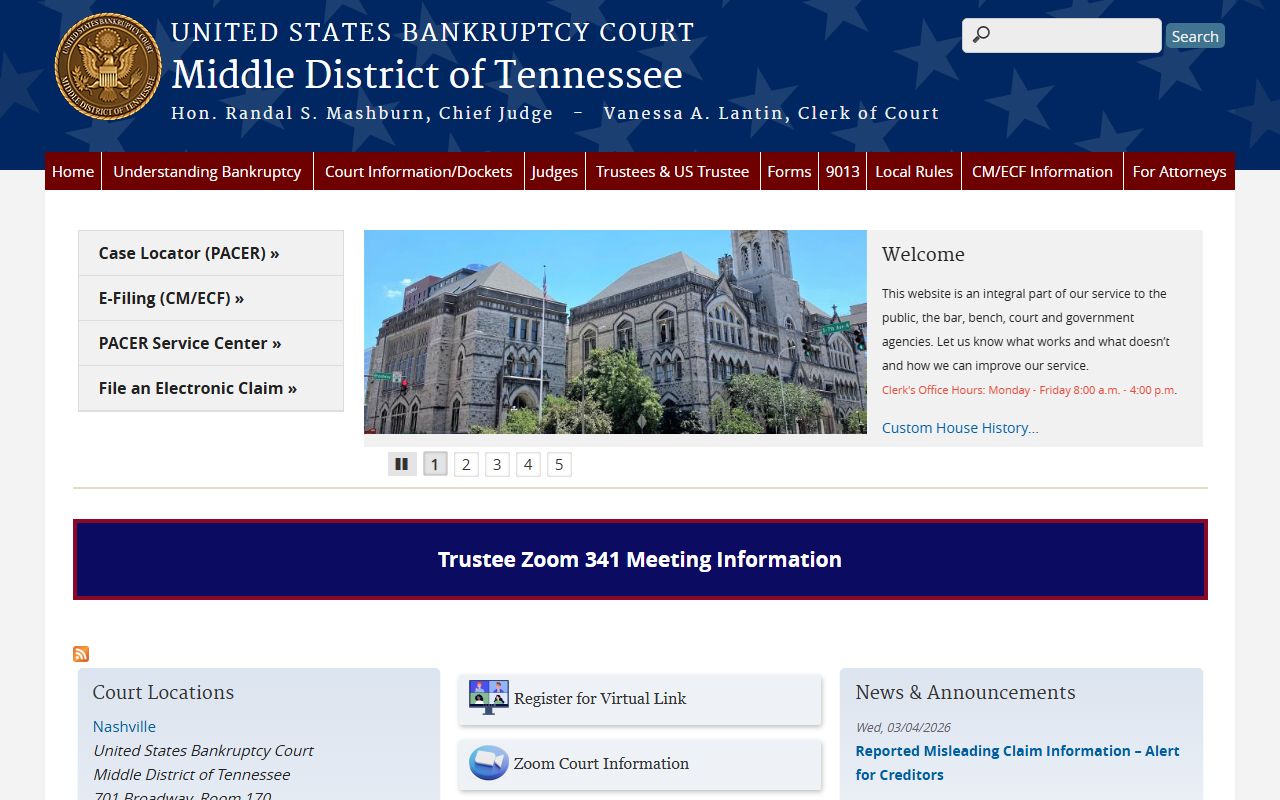
For federal bankruptcy, the clerk is the U.S. Bankruptcy Court for the Middle District of Tennessee. Appeals from federal district court rulings go to the Sixth Circuit, which has its own clerk too.
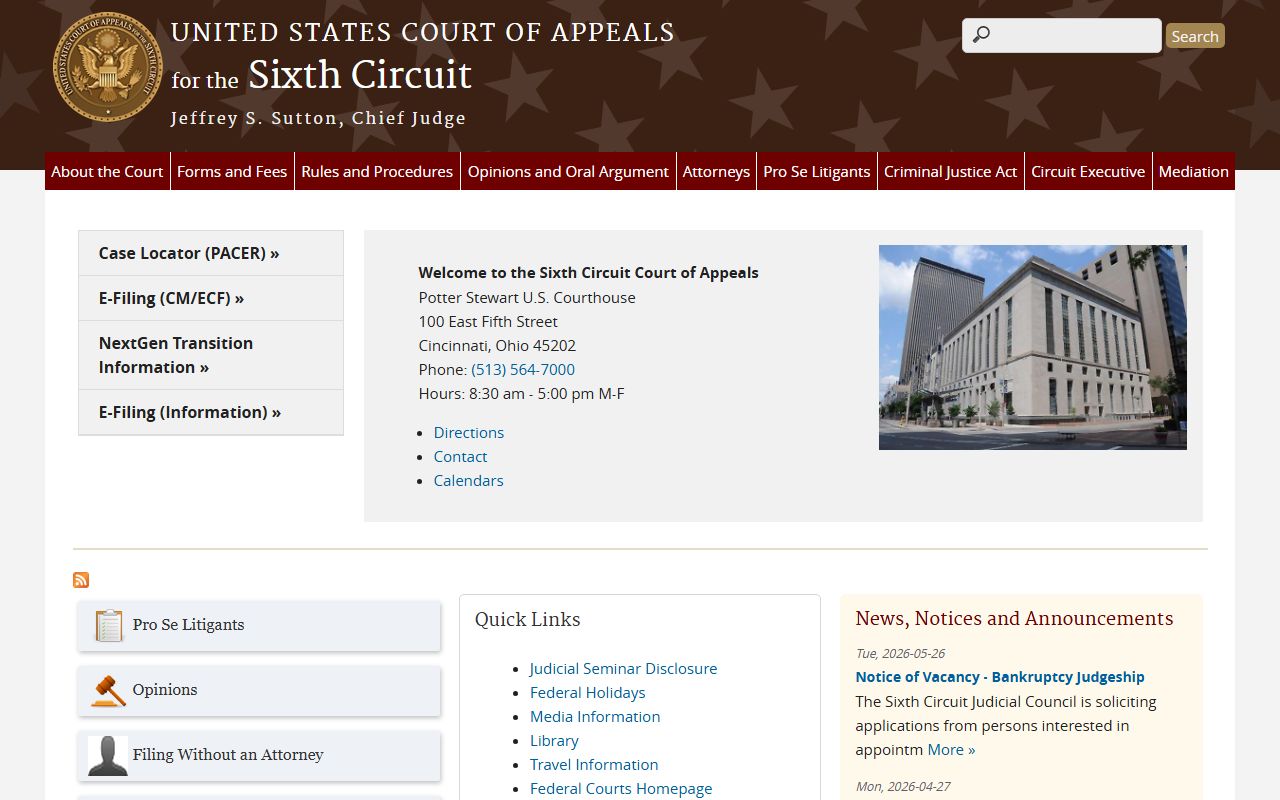
The U.S. Court of Appeals for the Sixth Circuit handles federal appellate matters from this region. None of these federal records are searched through Williamson County offices. For all of those, use PACER and the federal clerk that holds the case.