
What a Williamson County Court Docket Shows
A docket is the official event log for a case. It lists each filing, order, hearing, and result in date order. A docket is not the full file. It tells you what happened and when, while the documents behind those entries may need a separate copy request. Reading a docket the right way answers most scheduling and status questions without a trip to the courthouse. It is the fastest way to see whether a case is open, set for a hearing, or already disposed.
Dockets in Williamson County come from different courts. Circuit Court dockets cover felony, civil, and domestic cases. General Sessions dockets cover misdemeanors, traffic, civil warrants, and detainers. Chancery dockets cover probate and equity. Juvenile dockets exist but are confidential. The table below lists the fields you will see on a typical docket.
| Docket Field | What It Shows |
|---|---|
| Caption | The case title, such as State v. Defendant or Plaintiff v. Defendant. |
| Case Number | The clerk's exact ID for the case. |
| Filing Date | The date the case opened in that court. |
| Events | Chronological actions: motions, orders, notices, and hearings. |
| Status | A short label such as pending, disposed, or appealed. |
| Next Setting | The next hearing date and courtroom, which can change. |
How to Find a Williamson County Docket
Finding a docket follows the same path as any record request here. Name the court, gather your identifiers, then ask the clerk or search the right system. Have the party name, the case number if known, and the rough filing year ready. The clerk can confirm the next setting and the recent events even when no public portal exists.
- Decide which court holds the case: Circuit, General Sessions, Chancery, or Juvenile.
- For appellate matters, open the Tennessee Public Case History portal and search by name or case number.
- For trial-court dockets, contact the Circuit Court Clerk or the Clerk and Master.
- Give the clerk the party name, case number, and filing year.
- Ask for the next hearing date, the courtroom, and the most recent docket entries.
The state Administrative Office of the Courts groups the trial courts that produce these dockets. Its overview of Circuit, Criminal, Chancery, and Business Courts is on the Tennessee AOC trial courts page.
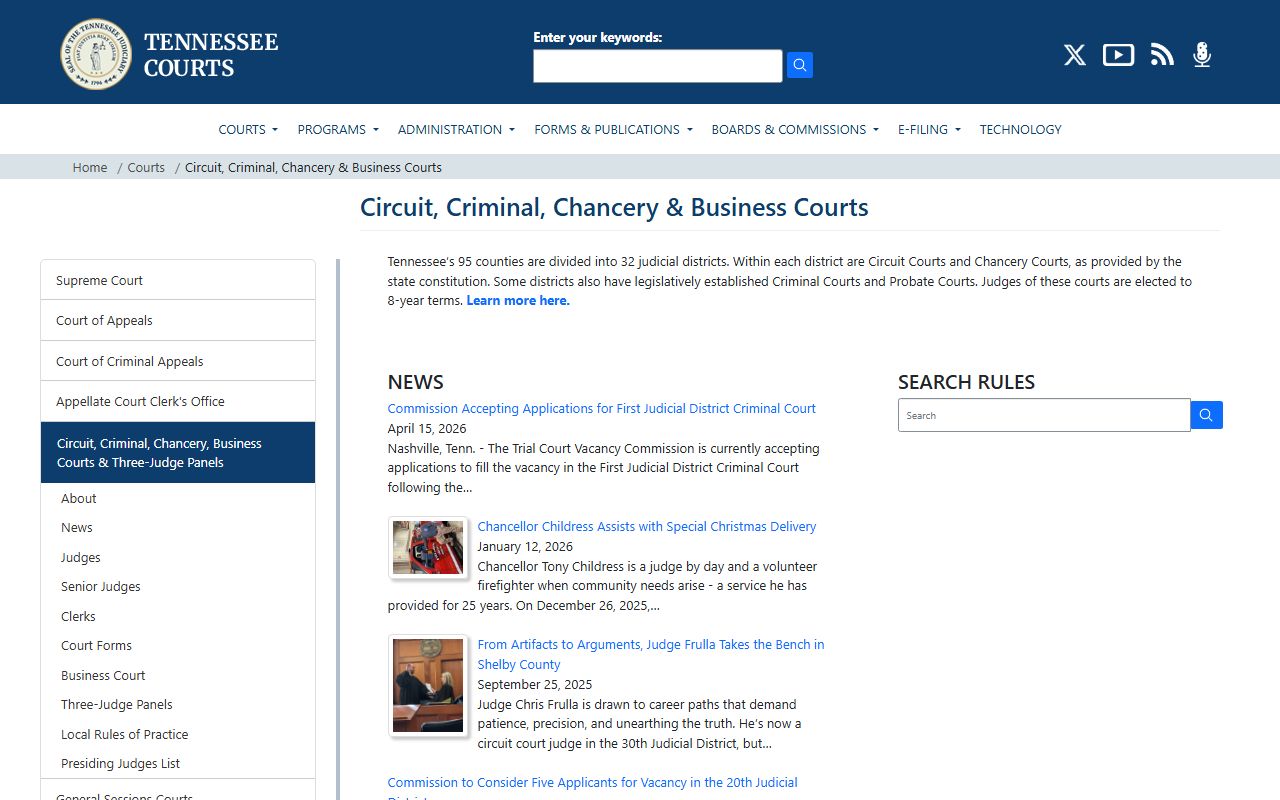
That overview helps confirm which court level created the docket, which in turn tells you which clerk to call in Williamson County.
Hearing Dates and Courtrooms
Most people search a docket for one reason: to find the next court date. The docket lists the next setting, the time, and the courtroom, but those details can move. A case can be reset for many reasons, including a continuance, a scheduling conflict, an attorney change, or a judge's order. That is why the printed date on an old notice is never the last word.
The Williamson County trial courts sit in the Judicial Center in downtown Franklin. When you confirm a hearing, ask the clerk for the room and the division along with the date, since several courts run dockets in the same building on the same morning. Arrive early to clear security and find the right courtroom. If a hearing is set remotely or by video, the clerk or the notice will say so, and you should not assume an in-person setting from an older document.
Self-represented parties should treat the clerk's confirmation as the source of truth. A voicemail or a guess about a date can lead to a missed appearance, and a missed criminal or traffic date can trigger a bench warrant. Verify, write down the case number, and keep your notice.
General Sessions Dockets in Williamson County
General Sessions is the busiest court for everyday dockets. It hears misdemeanors, preliminary criminal hearings, traffic, civil warrants, and detainers. Because volume is high, settings move fast and dates can reset often. Anyone tracking a General Sessions case should confirm the next date close to the hearing rather than relying on an older notice.
The state explains the role of these courts in plain terms. You can read the overview on the Tennessee AOC General Sessions page, which describes the limited civil and criminal jurisdiction.
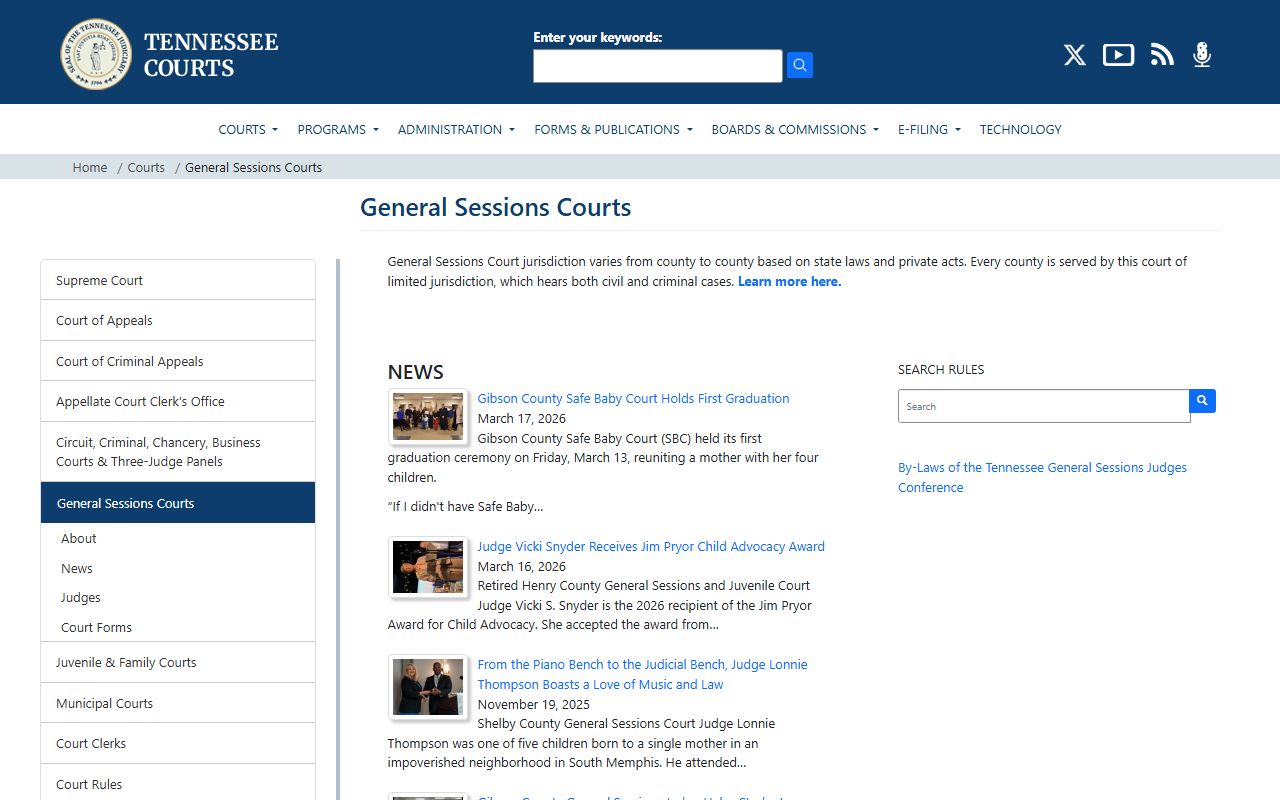
A criminal case can start in General Sessions and move to Circuit Court if it is prosecuted as a felony. When that happens, the docket continues under a new court and case number, so ask the clerk to point you to the current file.
Juvenile and Family Docket Limits
Juvenile Court dockets are not public the way adult dockets are. Tennessee law restricts juvenile records, so a person should not expect to browse a child's case the way they would a civil suit. Access is usually limited to parties, counsel, agencies, or someone with a court order.
The state outlines how juvenile and family courts operate statewide. The Tennessee AOC juvenile and family courts page describes the structure and the confidential nature of much of this work.
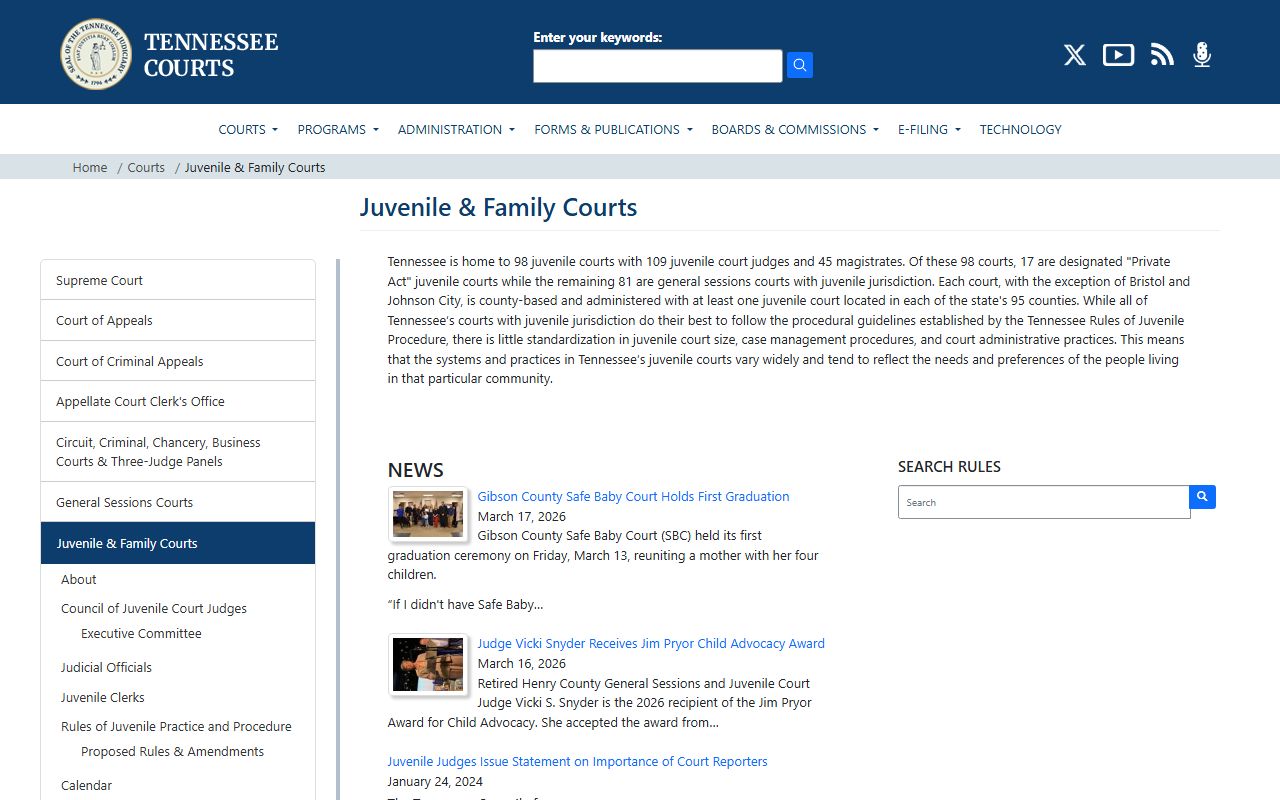
If you have a legal reason to view a juvenile docket, raise it with the Juvenile Court clerk and be ready to show your party status, attorney status, agency role, or court authorization.
Appellate Dockets and Public Case History
Appellate dockets are the one part of the system with an open online search. The Tennessee appellate Public Case History portal covers the Supreme Court, the Court of Appeals, and the Court of Criminal Appeals. It returns the appellate case number, title, court, filing date, status, and event history. It does not show Williamson County trial dockets, so use it only for appeals.
Search the portal by party name or case number. If a Williamson County case was appealed, the appellate docket will trace the appeal even though the trial file stays with the local clerk. Pair the two when you need the full story of a case that moved up on appeal. The appellate event list shows briefs, orders, oral argument dates, and the final opinion when one is filed.
How Dockets Differ From Full Case Records
A docket and a case file are not the same thing, and the difference trips up a lot of first-time researchers. The docket is the index. It names every event and the date it happened. The case file holds the actual documents, such as the complaint, the motions, the orders, and the final judgment. You can often learn the status of a case from the docket alone, but you need the file to read what a specific order actually said.
That gap matters for cost and access. A docket check is usually quick and may be free at the counter, while copies of documents carry a fee. Some documents listed on a public docket are sealed or confidential, so the line appears even though the paper behind it does not. When you need the substance of a ruling, ask the clerk for a copy of that specific document by its docket date and description rather than asking for the whole file.
Criminal and Civil Docket Terms
Docket entries use shorthand. A few terms come up on almost every case, and knowing them makes the event list readable. The definitions below cover the most common ones on Williamson County dockets.
- Arraignment
- The first criminal appearance, where a plea or advisement is entered.
- Continuance
- A reschedule of a hearing or trial to a later date.
- Disposition
- The final result for a charge or claim.
- Judgment
- The enforceable order that ends a matter.
- Capias
- A court order to take a person into custody, often after a missed date.
Read the events from oldest to newest to follow the case story. Read newest to oldest to find the next deadline. A status line is only a snapshot, so the events list is where the real history lives.
Other entries point to money and process. A docket may show court costs, fines, or a litigation tax, and those can stay open after the main matter is closed. Service entries record when a party was notified. Bond entries record release terms in a criminal case. When an abbreviation is unclear, the clerk can explain what a code means, though a clerk cannot give legal advice about what it means for your case.
Trial Court Docket Access Limits
Because no universal public trial-docket portal for Williamson County was located, the clerk is the reliable source. Some entries point to sealed or confidential documents that you cannot view even when the docket line is visible. Older cases may be archived and slower to pull, so plan for a little lead time on anything that is not recent.
Note: Always confirm the next hearing date with the clerk before you appear, because settings can change after a docket is printed.
For full case files, see the Williamson County court records page. For criminal case paths, the arrest records page covers the General Sessions to Circuit Court route. Traffic dockets often run through General Sessions or a city court, covered on the traffic court records page. To reach the office that keeps these dockets, use the Circuit Court Clerk page.