
County Clerk Marriage Licenses
The Williamson County County Clerk issues marriage licenses. Tennessee does not require a blood test, and the state recognizes solemnization by authorized officiants including certain ministers, judges, and other statutorily named persons. The County Clerk is also the office to ask about certified marriage copies once a license is recorded.
You can review the office at the Williamson County County Clerk page. The County Clerk page on this site covers the office in more depth, including services beyond marriage.
Tennessee Marriage Pre-Application
The Tennessee County Clerk system supports an online marriage pre-application that lets couples start the marriage license process before walking into the office. Choosing Williamson County in the pre-application sends the start of the application to the local clerk for issuance. The pre-application speeds up the counter visit, but it does not replace the in-person steps, the identification, or the fee.
Both applicants provide identifying information, address, date of birth, and marital history in the pre-application. The system then connects to the clerk, who finalizes the license at the office. Couples who plan to use the discount for a qualifying premarital preparation course should ask the clerk what proof is needed and which courses qualify under Tennessee law.
Marriage License Application Fields
The marriage pre-application asks for the information the clerk needs to issue the license. The fields below come from the Tennessee County Clerk pre-application form.
| Field Label | Type | Required | Notes / Format |
|---|---|---|---|
| County | Dropdown | Yes | Select the county where the license is issued. |
| Applicant Names | Text | Yes | Both applicants' legal names. |
| Date of Birth | Date | Yes | For each applicant. |
| Address | Text | Yes | Current address for each applicant. |
| Marital History | Text | Yes | Prior marriages and how they ended. |
| Submit / Continue | Button | n/a | Sends the pre-application for processing. |
After issuance, the ceremony must happen within the period Tennessee law allows. The officiant returns the signed license for recording. Certified copies become available after recording.
How to Apply for a Williamson County Marriage License
The marriage process is short when both parties prepare ahead of time. The steps below outline the typical path through Williamson County.
- Review the Williamson County County Clerk marriage requirements.
- Complete the Tennessee County Clerk online marriage pre-application.
- Gather acceptable identification for both applicants.
- Bring identification and payment to the County Clerk.
- Ask about the premarital preparation course discount if a qualifying course was completed.
- Receive the license and complete the ceremony within the valid period.
- Have the officiant complete and return the license for recording.
- Request certified copies from the County Clerk after recording.
Order extra certified copies if you expect to need them for name changes, banks, employers, or benefits paperwork. Each agency tends to want its own certified copy.
Marriage and Divorce Record Fees
Marriage license fees and divorce filing fees follow current state and county schedules. A current Williamson County fee table for these items was not located in the sources reviewed, so confirm amounts with the County Clerk for marriage and with the court clerk for divorce. The fee types below are the common ones.
| Item | What It Covers |
|---|---|
| Marriage license | The license issued by the County Clerk. |
| Premarital course discount | A possible reduced fee when a qualifying course was completed. |
| Certified copy | Clerk-certified copy of a marriage license or divorce decree. |
| Divorce filing fee | Court filing cost set by the clerk for the case type. |
| Service / publication | Possible additional cost depending on how the case is served. |
Tennessee allows fee waivers in some cases for indigent filers through court-approved poor person paperwork. The clerk can explain the waiver process at the time of filing.
Where Divorce Cases Are Filed in Williamson County
Divorce is a court case, not a county clerk record. In Williamson County, divorce filings typically go through Circuit Court, with the Circuit Court Clerk as the records office. Some matters can run through Chancery Court depending on local practice and the specific issues, with the Clerk and Master holding the file. The case caption identifies the court and the docket number, and certified copies of the final decree are ordered from the clerk that holds the case.
Common divorce filings include the complaint for divorce, the answer, motions, temporary orders, mediation documents, marital dissolution agreements, parenting plans, child support worksheets, the final decree, and any later post-judgment motions. The court records page explains how to request copies of any of these.
Parenting Plans and Child Support
When minor children are part of a Williamson County divorce, the court usually requires a permanent parenting plan. The plan sets each parent's residential schedule, decision-making roles, transportation responsibilities, and the way disputes will be handled. Tennessee uses Supreme Court approved parenting plan forms that the parties can use as a starting point. Child support runs on Tennessee's guideline calculation, and the court signs off on the worksheet.
Parenting plans become part of the divorce file. They can be modified later if circumstances change, but a parent cannot simply change them on their own; a court order is needed. The clerk that holds the divorce case is the office for a certified copy of the parenting plan or the support order, which agencies and schools sometimes ask to see.
Mediation can move a contested family case toward a workable plan without a long trial. The Tennessee court forms library includes mediation forms, and many family cases use court-ordered or voluntary mediation to settle the parenting and financial issues.
How to Search Williamson County Divorce Records
A divorce records search uses the same identifiers as any other court-file request. Have the names of the spouses, the rough filing year, the case number if you know it, and the document you want. Call the clerk before you mail anything, since old cases may be archived and slower to retrieve.
- Confirm whether the divorce was filed in Circuit or Chancery.
- Contact the Circuit Court Clerk or the Clerk and Master, depending on the court.
- Give the clerk the names, filing year, and the document needed.
- Ask for a plain copy or a certified copy, and confirm the current fee.
- Allow extra time for older or archived files.
For records that involve minor children or sealed information, expect more limited access than for an ordinary civil case.
Tennessee Divorce Grounds and Residency
Tennessee divorce rules set the basics. State law has residency requirements before filing. Tennessee allows fault grounds and a no-fault style irreconcilable-differences divorce. When minor children are involved, parenting plan and child-support paperwork are required, and the court often refers contested cases to mediation. The exact path depends on facts in the case and how much the parties can agree on up front.
Self-represented parties should use official forms. The state publishes Supreme Court approved divorce forms and other family-law forms in one library.
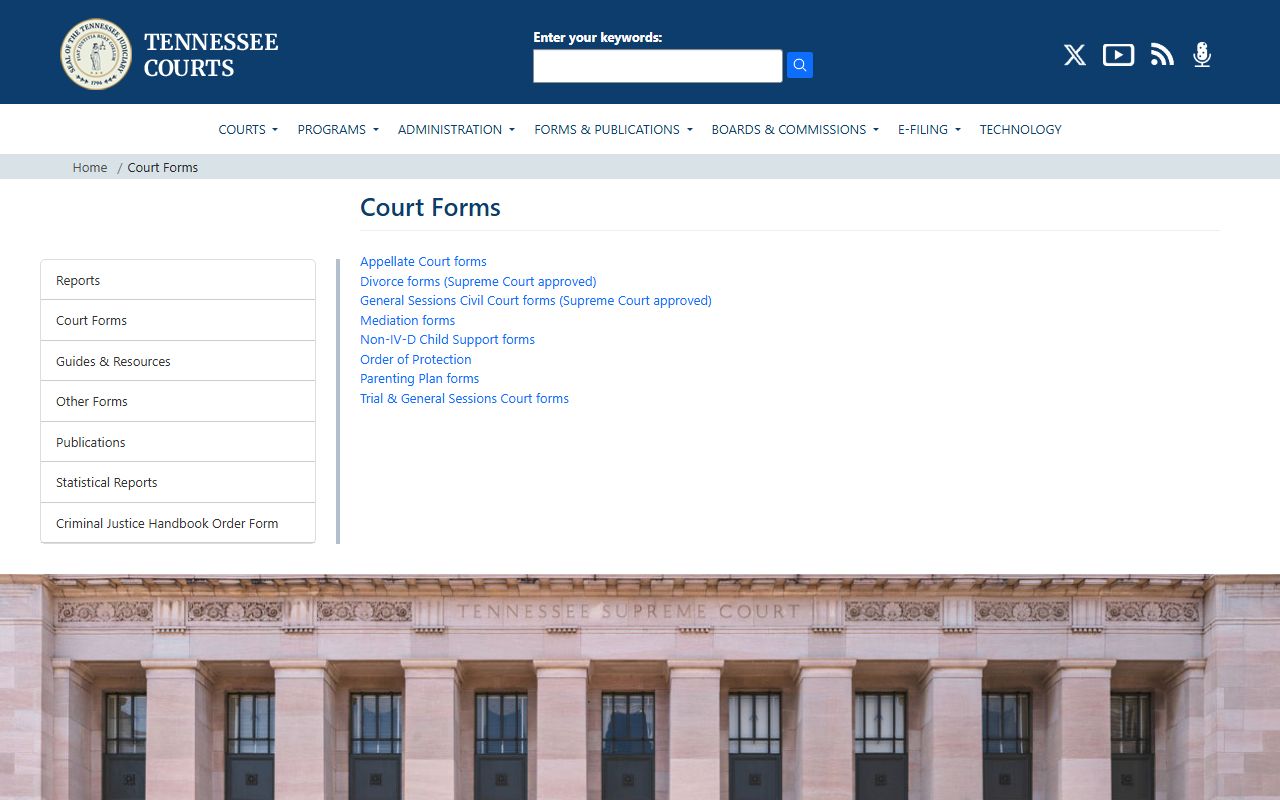
The Tennessee court forms library includes Supreme Court approved divorce forms, parenting plan forms, mediation forms, and non-IV-D child support forms. Local Williamson County clerks may also have local procedural requirements, so check the clerk page before filing.
Divorce Record Access and Restrictions
Many divorce docket records are public, but not every document is open. Records involving minor children, financial account numbers, protected addresses, sealed exhibits, or confidential filings may be redacted or restricted. The court that holds the divorce file is the office to request copies, certified or plain.
Adoption records carry stronger protections than ordinary court files. Adoption identifying information is subject to special confidentiality and access rules under state law.
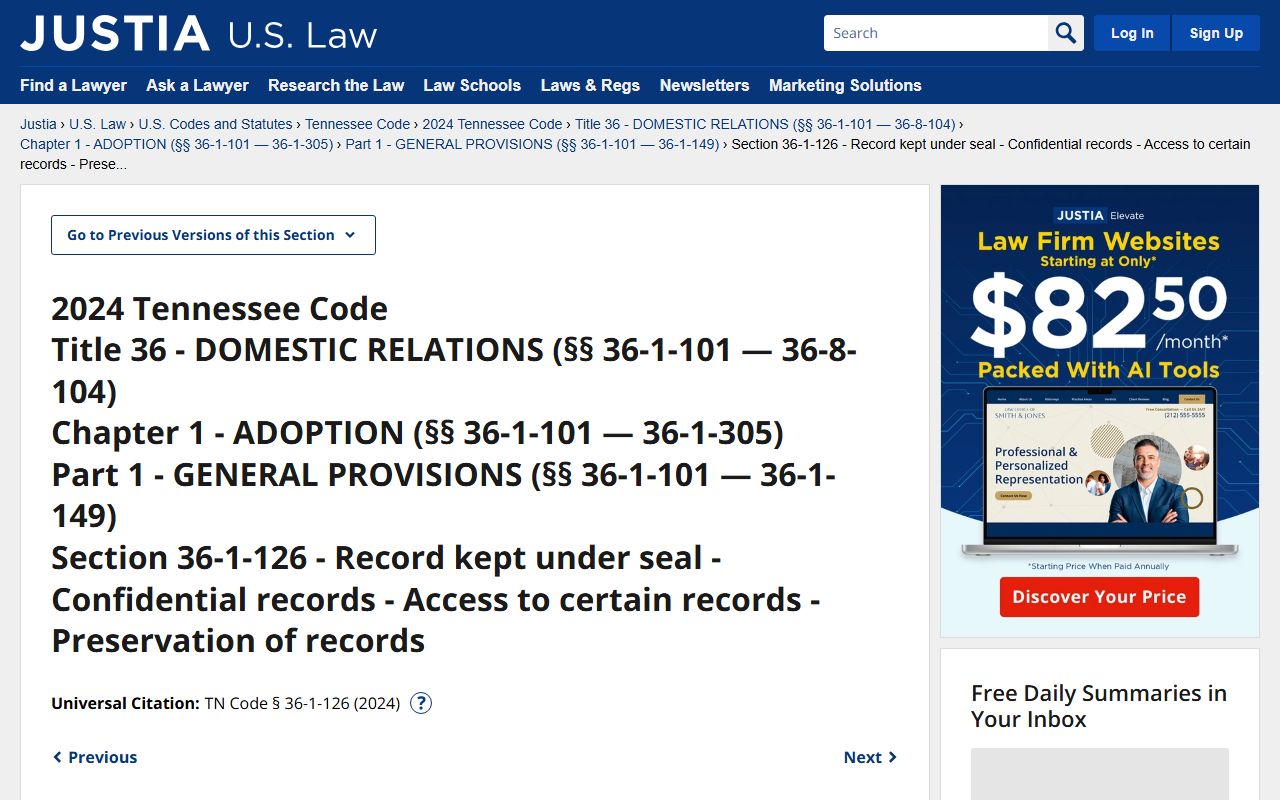
The Tennessee Code § 36-1-126 rules cover adoption confidentiality. Adoption files are not searched the way an ordinary divorce file is, and they are not opened to the public on request.