
Is There a Williamson County Warrant Search Portal?
No official public active-warrant search portal was located on the Sheriff's Office or county court pages during this research. That is an important starting point. Many sites claim to offer instant warrant lookups, but those are not official, and some are designed to sell reports. For a real answer, you verify a warrant through the agency that holds it. The table below shows the honest state of online access.
| Search Option | Available? | How to Verify Instead |
|---|---|---|
| Public online warrant search | Not located | Contact the Sheriff's Office or the issuing court directly. |
| By name or date of birth | Through agency only | Provide name and DOB to the sheriff or clerk. |
| By warrant or case number | Through agency only | Give the warrant or case number if you have it. |
Because a warrant can mean an arrest, treat any check as serious. If the warrant is criminal, talk to a lawyer before you walk into a courthouse or jail. A quiet phone call to the right unit, or a call made by your attorney, is far safer than guessing. Unofficial warrant sites also tend to be out of date, and a wrong answer can lead to either a false sense of safety or needless panic. The official agency is the only source that reflects the warrant's current status.
Types of Warrants in Williamson County
Warrants are not all the same, and the word covers very different documents. Some authorize an arrest. Some authorize a search. One Tennessee term, the civil warrant, is not a criminal matter at all. Sorting the type first tells you which office to call.
- Arrest warrant - issued on probable cause for a criminal offense.
- Bench warrant or capias - issued by a court, often for a missed date or contempt.
- Search warrant - authorizes a search; often sealed before it is executed.
- Fugitive warrant - used for out-of-county or out-of-state custody.
- Civil warrant - a General Sessions document that starts a civil lawsuit, not an arrest.
Many General Sessions filings begin with a civil warrant. The court page explains the limited civil and criminal work it handles.
You can review the Williamson County General Sessions Court page for how those cases work. The civil warrant point matters because the same word scares people who think it means an arrest.
Civil Warrant vs Arrest Warrant
In Tennessee General Sessions practice, a civil warrant is the document that starts a limited civil case, such as a debt, contract, or eviction claim. It is not an arrest warrant. This confuses a lot of people, because the word warrant usually suggests police custody. A civil warrant is a lawsuit notice, and the right response is to answer the case, not to fear arrest.
The Sheriff's Office keeps these matters on separate lines, which signals how different they are. Criminal warrants and extraditions run through one number, while civil warrants run through another. Before you call, decide which one you mean, so you reach the right unit and get the right answer.
So how do you tell them apart? Look at the document. A civil warrant names a plaintiff and a defendant and asks for money or possession, and it gives a court date to answer the claim. A criminal arrest warrant names a charge and authorizes custody. If a debt collector or a landlord is involved, you are almost certainly looking at a civil warrant, and the response is to show up and defend the case, not to surrender. If you are unsure, ask the clerk to read you the document type before you assume the worst.
Bench Warrants and Capias in Williamson County
A bench warrant, sometimes called a capias, is issued by a judge rather than by a police investigation. It usually grows out of an existing case. The most common cause is a missed court date, but there are several others. Because these come from the court, the issuing court is the right place to ask how to clear one. A bench warrant can lead to arrest during a routine traffic stop, so it should never be left alone.
Judges issue bench warrants and capias orders for reasons such as these:
- Failure to appear for a scheduled court date.
- Failure to comply with bond conditions.
- Failure to report or comply with probation.
- Failure to pay or appear on a court-ordered obligation when the judge orders enforcement.
- Contempt of court.
- Violation of a no-contact or protective-order condition.
Resolving the underlying issue, such as getting back on the docket, is often what clears the warrant. The clerk can explain the court's process for setting or recalling it, though the clerk cannot give legal advice.
How to Verify a Williamson County Warrant
Verification goes through official channels. The Sheriff's Office contact page lists the units that handle warrants, and using the correct number saves time. Have a name, a date of birth, and a case or warrant number ready if you have one. Do not rely on an unofficial database for something this serious.
The Williamson County Sheriff's Office contact page lists the official numbers. The contact card below pulls the warrant-related lines together.
Williamson County Sheriff's Office
408 Century Court
Franklin, TN 37064
Criminal Warrants / Extraditions: 615-790-5565
Civil Warrants: 615-790-5492
Non-emergency: 615-790-5550 (24 hours)
Warrant work connects to detention, court security, and transport, but those are still distinct functions. The command-staff page shows the division leaders over these areas.
The command-staff page helps confirm who oversees warrants and court services. Still, a person resolving a warrant should use the warrant lines above and the issuing court, not a generic records vendor.
What a Warrant Record Shows
A warrant record uses a standard set of fields. Whether you can see them depends on the warrant type and its status, since some warrants are sealed. The list below covers what a typical warrant record contains once it is part of an open court matter.
- Name, plus date of birth or age.
- Warrant number and the issuing court.
- Charge or the reason the warrant was issued.
- Case number and the issuance date.
- Bond amount and bond type.
- Arresting or holding agency.
- Status: active, served, recalled, quashed, expired, or sealed.
A served warrant usually creates a booking record, and a recalled warrant creates an order in the case file. The arrest records page covers what happens after a warrant is served.
Status is the field people misread most. An active warrant means it is still outstanding and can be acted on. A served warrant means the person was taken into custody on it. A recalled or quashed warrant means the court withdrew it. An expired warrant may no longer be valid, but you should never assume a warrant is dead without official confirmation, because databases can lag the court's real action by days or weeks.
How to Resolve an Outstanding Warrant
If you learn there is a warrant, do not ignore it. A bench warrant or capias is often issued for a missed court date, a probation issue, or contempt, and it does not go away on its own. The steps below outline a careful approach, but legal advice from an attorney is the safest path for any criminal warrant.
- Verify the warrant through the Sheriff's Office or the issuing court, not a database.
- Ask which court issued it and whether a bond is already set.
- Contact an attorney if the matter is criminal, domestic, or out of state.
- If the warrant is for a missed date, ask the clerk how to set or recall it.
- Post bond only through official jail or clerk channels or a licensed bonding process.
- Get written proof that the warrant was served, recalled, or cleared.
- Confirm the new court date and any conditions of release.
Resolving a warrant creates its own records, such as a recall order, a release order, or an updated docket entry. Keep copies of everything.
Diversion and Missed Court Dates
Some cases that lead to a bench warrant can still end well through diversion. Tennessee judicial diversion lets eligible defendants complete conditions and potentially avoid a conviction, with possible expunction after success. It is not automatic and requires court approval.
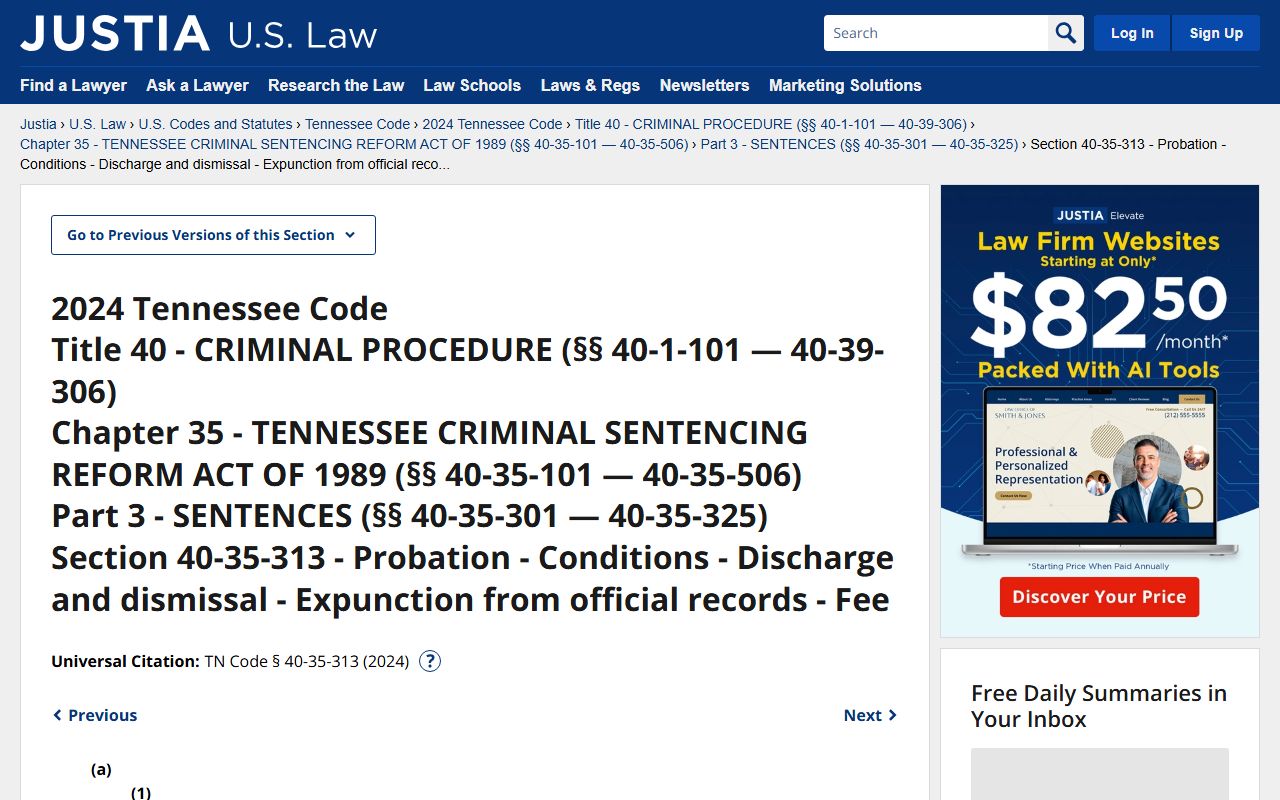
The rules appear in Tennessee Code § 40-35-313. If a warrant came from a missed date in a case where diversion is possible, clearing the warrant and getting back on the docket is the first step toward that outcome.
Note: Sealed warrants and sealed indictments are not public before they are executed or unsealed, so a clean search does not always mean no warrant exists.
Self-Help and Where to Get Information
The state offers self-help resources for people dealing with court matters. The Tennessee Administrative Office of the Courts directs warrant, arrest, and trial questions to the clerk in the county where the case began, which for Williamson County means the local clerk in Franklin.
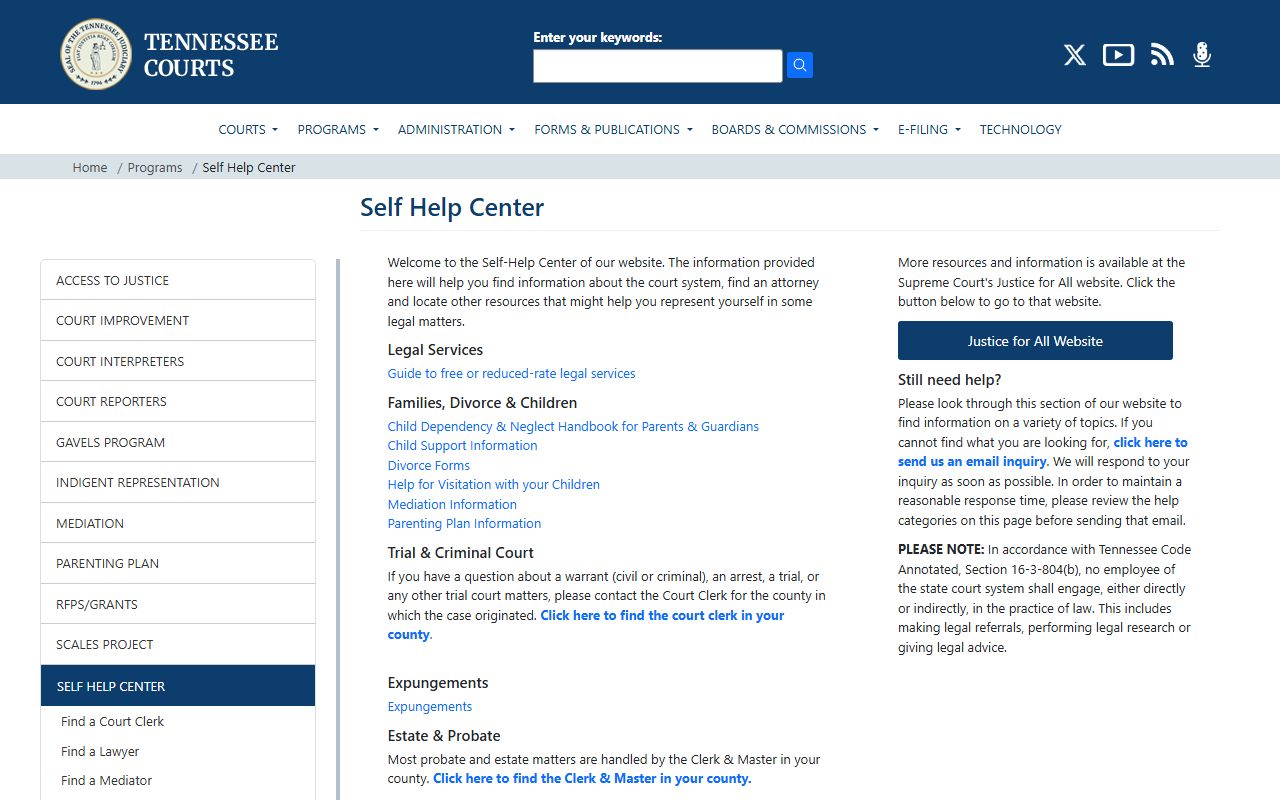
The Tennessee AOC Self Help Center has guides on trial-court matters, expungement, and forms. Court staff can give procedural information, but they cannot give legal advice. For related searches, see the court records and inmate records pages.