
How to Find Williamson County Arrest Records
Arrest and booking records are held by the Williamson County Sheriff's Office. When a person is arrested by the sheriff, a city police department, or another agency, they are booked into the John I. Easley Jr. Criminal Justice Center. The Detention Division creates the booking record, takes fingerprints and a photograph, inventories property, and enters charge and warrant information. That booking record is what tells you someone is in custody.
The Sheriff's Office did not publish a searchable public roster in the sources reviewed. To confirm a recent arrest or current custody, use the official Detention Division contact channels rather than a third-party site. The official page describes the jail and its services.
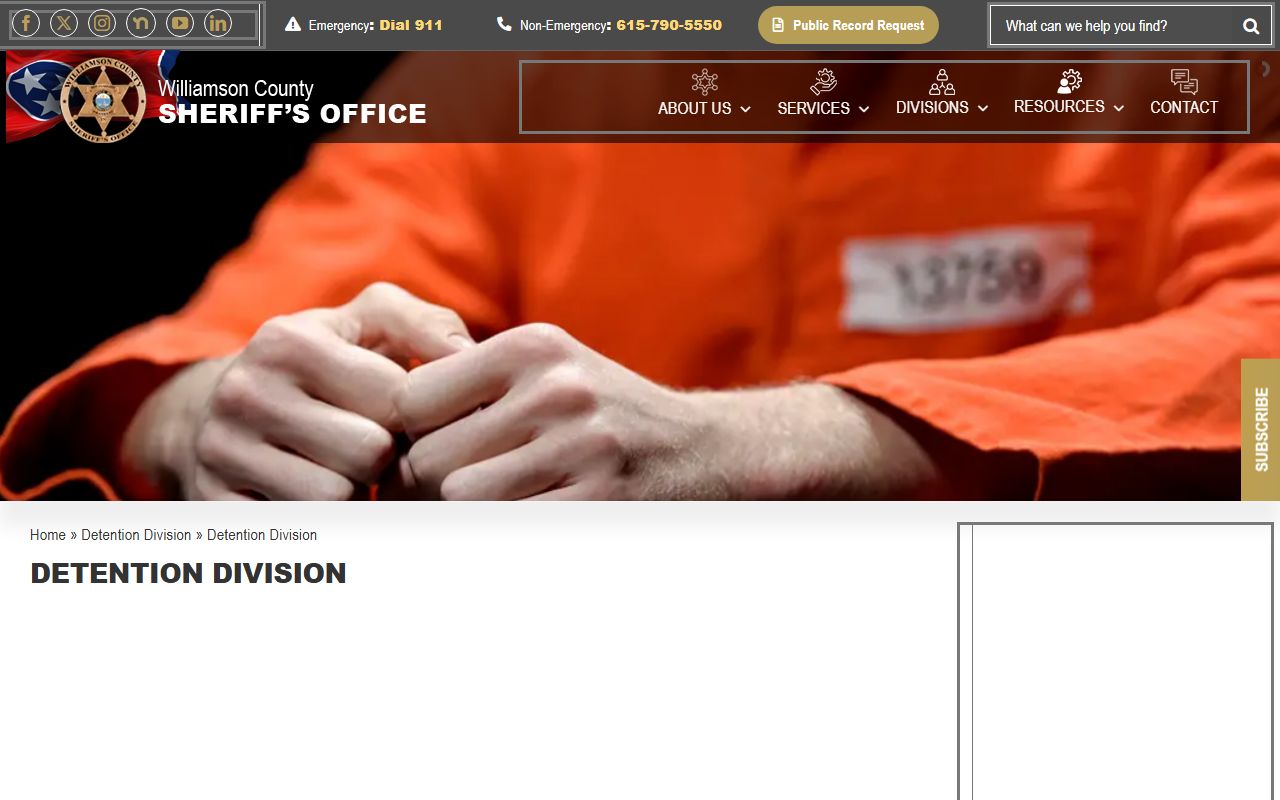
You can read the facility and detention details on the Williamson County Sheriff's Office Detention Division page. For booking verification, the Sheriff's Office lists a 24-hour jail booking information line. The inmate records page covers the custody search in full. Use the official numbers below rather than any third-party arrest site.
Williamson County Detention Division
John I. Easley Jr. Criminal Justice Center
408 Century Court
Franklin, TN 37064
Jail Booking Info: 615-790-5560 (24 hours)
Non-emergency: 615-790-5550
What a Williamson County Arrest Record Shows
An arrest and booking record uses a standard set of fields. The exact look depends on the agency, but the core data is consistent. If the county later publishes a public roster, these are the fields it would most likely display. They identify the person, the booking event, and the charges at the time of arrest.
- Full name, plus age or date of birth.
- Booking number and booking date and time.
- Physical description and a booking photo where published.
- Arresting agency and the charges at booking.
- Statute, case, or warrant number tied to the charge.
- Bond amount and bond type, plus a court date.
- Housing location and release status if released.
Notice that this is custody and processing data. It is not a verdict. The charges shown at booking can change once the prosecutor reviews the case, so the booking charge and the final court charge may not match.
Arrest Record vs Criminal Court Record
People often use these terms as if they mean the same thing, but they do not. An arrest record is created by law enforcement at booking. A criminal court record is created by the court once charges are filed and the case moves through the system. One person can have both, and the two can read very differently. The comparison below sets them side by side.
| Point | Arrest Record | Criminal Court Record |
|---|---|---|
| Created by | Sheriff or arresting agency | The court and the clerk |
| Shows | Booking, charges at arrest, custody status | Charges filed, hearings, plea, disposition |
| Where to look | Sheriff's Office Detention Division | Circuit Court Clerk for filed cases |
| Outcome | Does not show guilt or innocence | Shows the final result of the case |
For the filed criminal case, including charges, hearings, and the final disposition, see the Williamson County court records page. An arrest alone never proves a conviction.
The Williamson County Booking Process
Booking follows a set order, and the steps create the data you find in an arrest record. Knowing the flow helps you understand why custody status, classification, and the court case can each look different at the same moment. Booking records identify jail processing, while the court file tracks charges and orders.
- Arrest by the sheriff, a police department, or another agency.
- Transport to the detention facility for intake.
- Identification and safety screening at intake.
- Booking record created with fingerprints, a photo, and a property inventory.
- Charge and warrant information entered into jail and court systems.
- Bond or hold status set by warrant, magistrate, judge, or statute.
- Housing classification based on risk, medical, and security factors.
After booking, the person usually has an initial appearance or a General Sessions setting. Bond may be cash, surety, recognizance, conditional, or no bond, depending on the charge and any court order. Release timing depends on paperwork, holds, and transport, so it is not instant even after bond is posted.
Mugshots and What Is Public
Mugshots are booking photographs. Whether one is public depends on agency publication, law-enforcement records rules, expunction, and privacy limits. No official Williamson County roster with mugshots was located in the sources reviewed. Commercial mugshot websites are not official sources, and many charge to remove a photo, so they should not be treated as reliable or current.
If you need to confirm a booking photo or custody detail for a real legal reason, go through the Sheriff's Office. An expunged case may have its booking photo removed from public systems by court order, which is another reason a third-party site can be both wrong and out of date.
Charges vs Convictions
A charge is an accusation. A conviction is a finding or plea of guilt. Arrest records show charges at the time of booking, and those charges can change, get dropped, get amended, or never be filed at all. Only the court record shows whether a charge became a conviction. Treating a charge as a conviction is one of the most common and most harmful mistakes in reading these records.
| Point | Charge | Conviction |
|---|---|---|
| Meaning | An accusation of an offense | A guilty finding or plea |
| Source | Arrest or charging document | Court judgment |
| Can change | Yes: dropped, amended, dismissed | Final unless appealed or set aside |
Because charges and convictions live in different records, always confirm a final outcome in the court file before relying on it. A pending charge tells you nothing about guilt.
Searching State Criminal and Custody Records
Once a case moves past the county jail, state systems matter. A person sentenced to state prison is tracked by the Tennessee Department of Correction, not the county. The department runs the felony offender search and publishes corrections information for the public.
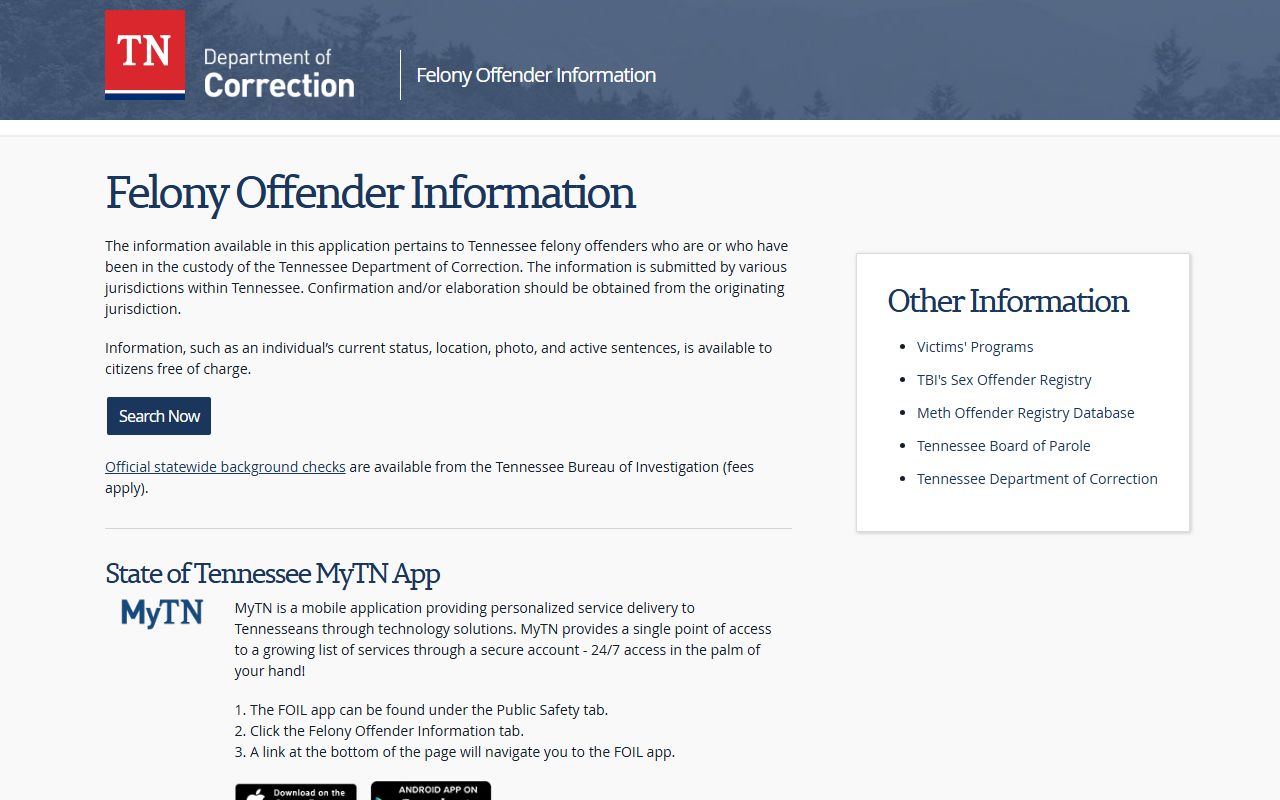
The Tennessee Felony Offender Information Lookup searches state felony offenders by last name, first name, or a state ID. It returns name, offender ID, status, location, sentence information, and offense details. It is a state corrections search, not a county jail roster, so a person held locally may not appear there at all.
For broader corrections information, the state agency site explains supervision, reentry, and offender programs. You can reach it through the Tennessee Department of Correction homepage.

To track custody status and get release alerts, use the statewide notification service. The VINELink Tennessee person search lets you look up custody status and register for notifications where a profile supports it.
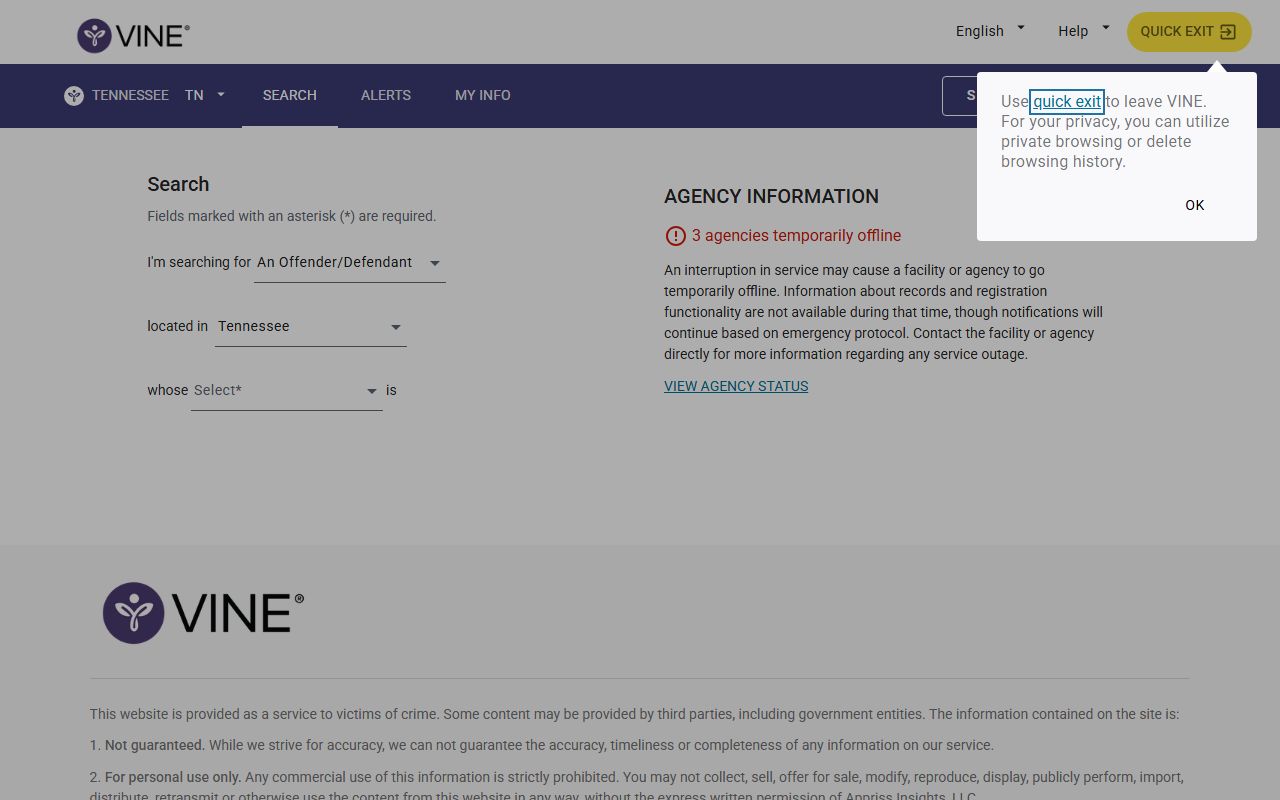
VINELink shows a custody status, the facility or agency, and notification options. For urgent legal decisions, confirm the status with the jail or agency rather than relying on the alert alone.
The Tennessee Sex Offender Registry
The Tennessee Bureau of Investigation runs the public sex offender registry. It is a registration database, not a general arrest or release log. A person can be released from jail without being on the registry, and a person on the registry may not be in custody. Keep that distinction clear when you research someone.
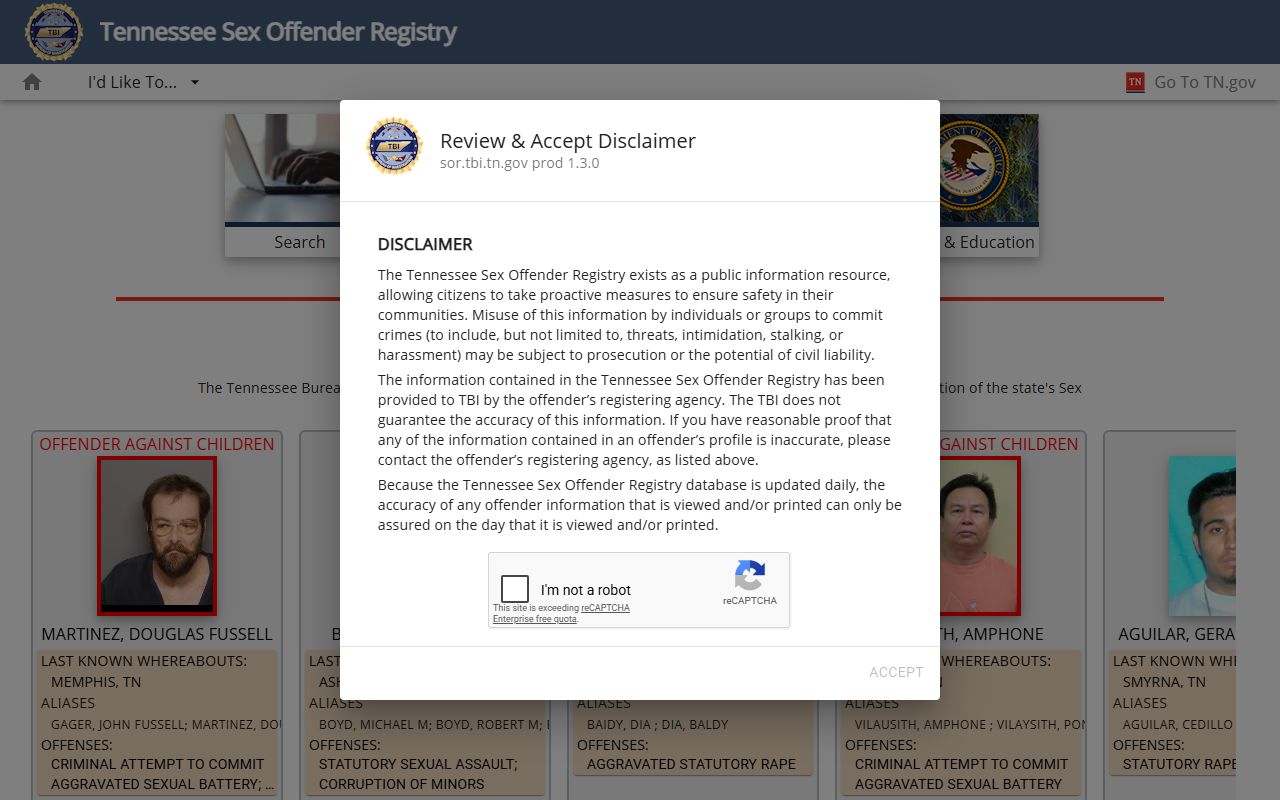
You can search the TBI sex offender registry by name, by address, or by county. A profile may show a photo, a physical description, offense information, an address, and a registration status. Use it for registry purposes only, not as a stand-in for a criminal history check.
Expunction and Sealed vs Expunged Records
Tennessee lets some criminal records be expunged, which removes them from public systems by court order. Dismissals, acquittals, no true bills, and certain eligible convictions or diversion outcomes may qualify. The statute sets the eligibility and the steps.
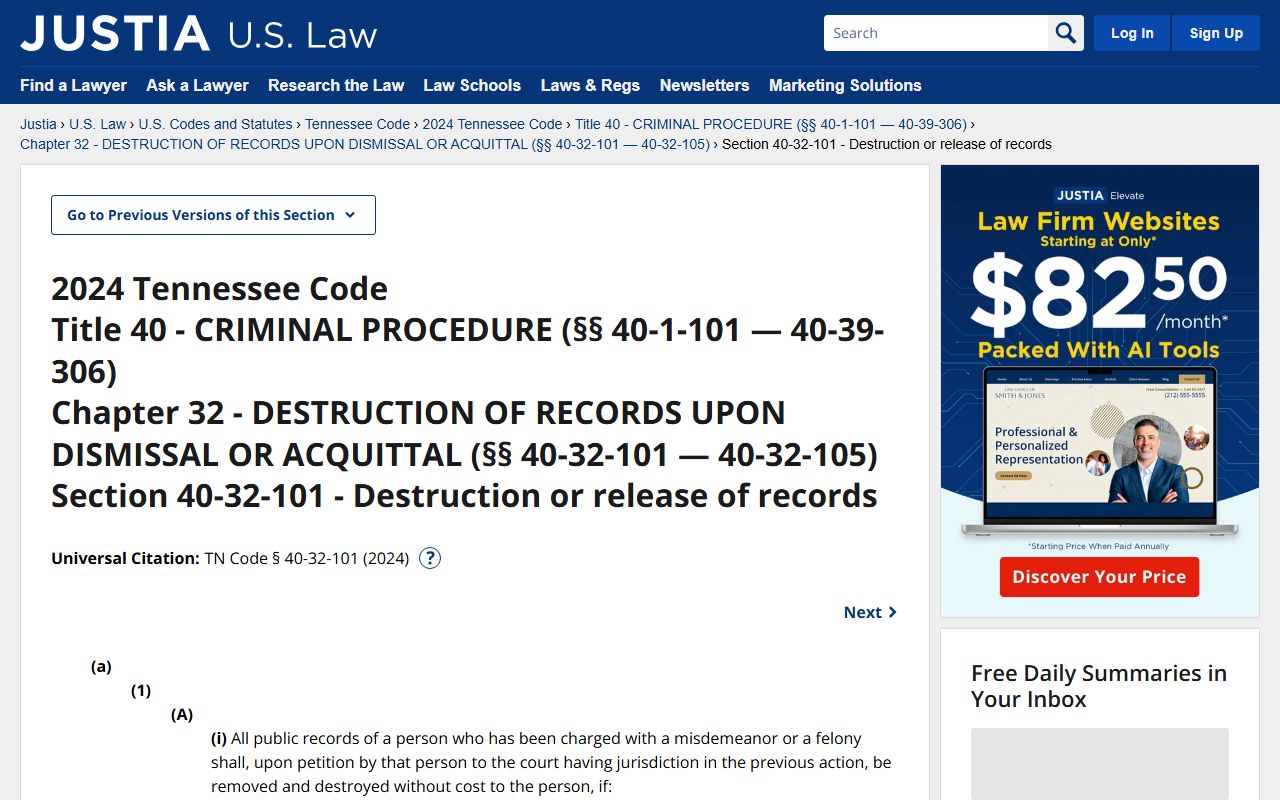
The rules appear in Tennessee Code § 40-32-101. A granted order tells the clerk and the agencies that hold copies, such as the sheriff and the prosecutor, to remove the record. Sealed and expunged are not the same, as the comparison shows.
| Point | Sealed | Expunged |
|---|---|---|
| Effect | Access limited by court order | Record removed from public systems |
| Still exists? | Yes, but restricted | Treated as unavailable to the public |
| Trigger | Court order or rule | Court-granted expunction petition |
Eligibility is specific, so anyone considering expunction should check the statute, the clerk process, and legal counsel before filing.
Background Checks and Restricted Criminal Records
Court records show case events in a court, but a full criminal history is a separate state background-check product. The two are not interchangeable. If you need a formal background check, use the proper state process, not a county court docket. Court files are useful for confirming a specific case, not for building a statewide history.
Some criminal records are restricted from the start. Juvenile, sealed, expunged, and diversion records are limited or confidential. For active warrants, the warrant records page explains how to verify safely, and DUI or other criminal traffic offenses connect to the traffic court records page.
One last point helps tie it together. A single arrest can create several separate records that do not all live in one place. There may be a police report, a booking record at the jail, a General Sessions warrant, a Circuit Court indictment, a bond record, a probation file, and a driver-record entry for a traffic-related charge. Each system updates on its own schedule. So when you research a person, do not assume one file tells the whole story. Match the record to the question you are actually trying to answer, then go to the office that holds that piece.