
How to Find Recently Released Williamson County Inmates
Start with the Williamson County Sheriff's Office for current custody and recent release verification. The Detention Division can confirm whether a person is in the John I. Easley Jr. Criminal Justice Center, whether they have been released, or whether they have been transferred to state or federal custody. Because no public county release log was located, a phone call to the official line is the most reliable approach.
If the person moved out of county jail to state custody, switch to TDOC FOIL. If they went federal, switch to the BOP locator. If you want to be alerted when status changes, register through VINELink. Treat these as a layered set rather than a single search.
- Call the Sheriff's Office for current local custody and release status.
- Search TDOC FOIL for state felony custody and supervision.
- Search the BOP locator for federal custody.
- Register on VINELink for ongoing notifications when status changes.
- Use the sex offender registry only for registration-related questions.
This stepped approach catches most situations. A person can move quickly between local jail and state custody, and a database that says "released" can sometimes mean "transferred" rather than fully discharged. When that matters, confirm directly with the agency now holding the person, not with a vendor or third-party site.
The Release Process and Timing
Release from a county jail follows a process. It is not instant, even after a bond is posted. Staff verify identity, check for holds and warrants, confirm court orders, and process paperwork before a person leaves the facility. If another agency has a hold, the person may not walk out even if the Williamson case is resolved. The actual discharge time can depend on paperwork volume, transport schedules, and shift handoffs.
Release can follow several events. Posting bond starts one path. A judge can order release. A case can be dismissed. A sentence can be completed. A transfer can move a person to state or federal custody, which looks like a "release" from the county but is not freedom. The paperwork at release may include bond conditions, the next court date, no-contact or protective-order conditions, probation or pretrial supervision instructions, and any treatment or testing requirements. Read every page and keep copies.
Property and account balances are separate from release. Personal property is returned according to jail procedures. Commissary and tech-account balances at CorrectPay are separate from phone-account funding at the inmate-phone vendor. Refund timing is not promised, so do not expect same-day refunds.
Setting Up Release Notifications
VINELink Tennessee is the statewide notification service for custody status changes. It lets you search by name or offender ID, then register for alerts on a specific profile where notifications are supported. The fields below come from VINELink.
| Field Label | Type | Required | Notes / Format |
|---|---|---|---|
| State | Dropdown | Yes | Tennessee preselected by URL. |
| Last Name | Text | Yes for name path | Person or offender last name. |
| First Name | Text | No | Narrows results. |
| Offender ID | Text | No | Exact ID if known. |
| Facility | Filter | No | Facility filter when available. |
| Register / Notify Me | Button | Conditional | Sets up notifications after picking a profile. |
A VINELink profile typically returns name, custody status, facility or agency, offender ID where available, and notification options. The alert is a tool, not a guarantee, so confirm any status used for legal or safety decisions with the agency.
Searching State and Federal Released Inmates
A person sentenced to state prison is tracked by the Tennessee Department of Correction, not the county. TDOC FOIL is the state felony offender search. A person in federal custody is tracked by the Bureau of Prisons. Use the right search for the right level of custody.
| Field Label | Type | Required | Notes / Format |
|---|---|---|---|
| Last Name | Text | Yes for name search | State felony offender search. |
| First Name | Text | No | Narrows by first name. |
| TDOC ID | Text | No | Exact state offender ID. |
| State ID | Text | No | Tennessee state ID if known. |
A TDOC profile typically returns name, offender ID, race, sex, date of birth or age, current status and location, sentence dates, offense information, and supervision status if on parole or probation. For federal custody, the BOP inmate locator searches by name or by federal register number. Federal release data tends to be less detailed than state data and may not show a daily location update.
Verifying Release in Person or By Phone
The fastest way to verify a Williamson County release is to call the Sheriff's Office. The jail booking line is staffed around the clock for custody questions, and the non-emergency line is also 24 hours. Local custody status can change quickly after bond posting, court orders, or transfers, so a database may lag the actual movement.
Williamson County Sheriff's Office
John I. Easley Jr. Criminal Justice Center
408 Century Court
Franklin, TN 37064
Jail Booking Info: 615-790-5560 (24 hours)
Non-emergency: 615-790-5550 (24 hours)
Have the person's full legal name and a date of birth ready, plus any case or booking number. Property return follows jail procedure, and release paperwork may include bond conditions, court dates, no-contact orders, probation instructions, or reporting conditions.
The Tennessee Sex Offender Registry
The Tennessee Bureau of Investigation runs the public sex offender registry. It is a registration database, not a release log. A person can be released from jail without being on the registry, and a person on the registry may not currently be in custody. Keep that distinction clear when you use it.
| Field Label | Type | Required | Notes / Format |
|---|---|---|---|
| Name | Text | No | First, last, or partial name. |
| Address / City / ZIP | Text | No | Geographic search. |
| County | Dropdown | No | Select Williamson County. |
| Radius | Dropdown | No | Distance search when using an address. |
| Search | Button | n/a | Runs the registry query. |
A registry profile may show name and aliases, a photograph, a physical description, an address, offense information, registration status, and certain employer, school, or vehicle data if publicly listed. Use the registry for registration purposes, not as a general criminal-history check.
Parole and Probation Information
Release from state custody often comes with supervision. Parole is post-release supervision granted by the parole board. Probation is court-ordered supervision in place of, or alongside, custody. Both create their own records and contacts. State supervision questions go to TDOC, not the county jail, while county probation questions follow the local court that ordered it.
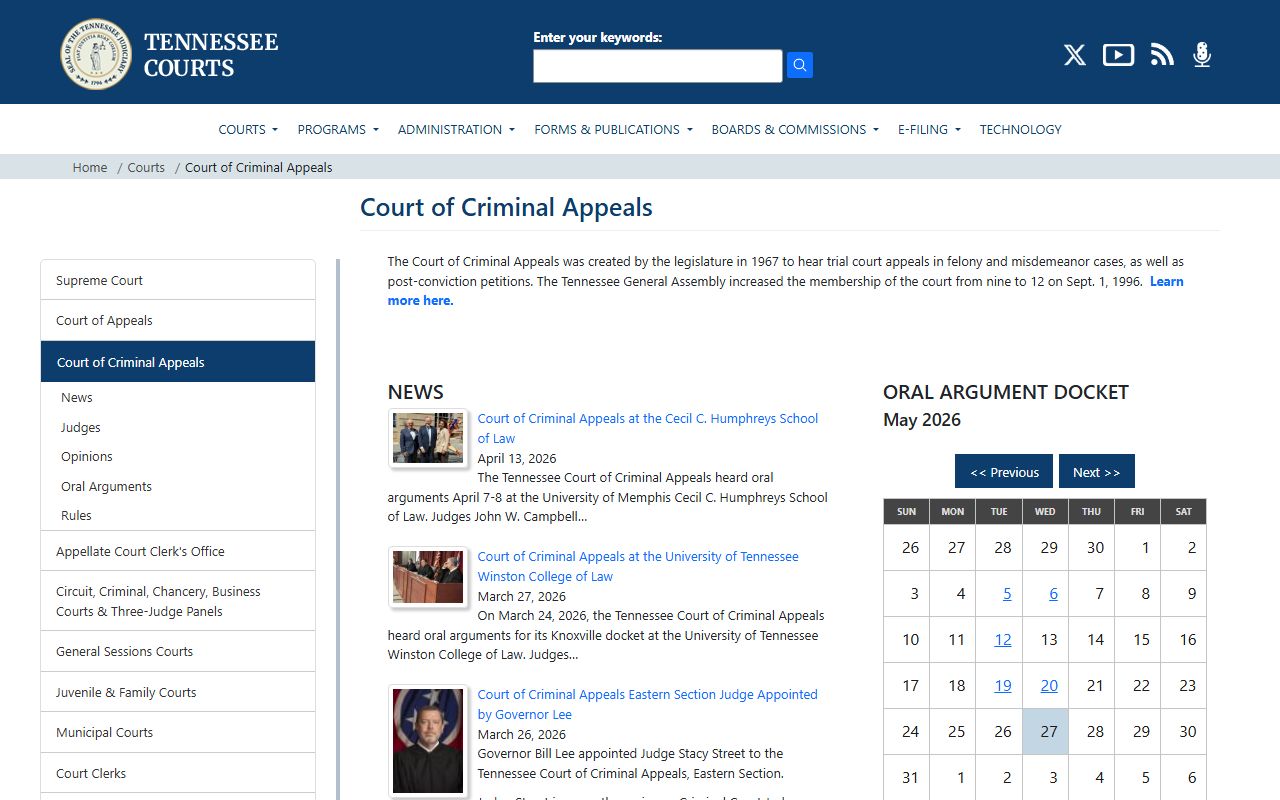
Criminal appeals from Williamson County go to the Tennessee Court of Criminal Appeals. An appeal does not change custody on its own, but it can lead to a reversal, a new trial, or a sentence change down the road. Supervision conditions remain in place unless a court orders otherwise.
People on probation usually report to a probation officer at set intervals, follow conditions like treatment or testing, and avoid contact restrictions or geographic limits. People on parole follow similar conditions set by the parole board. A violation can mean a hearing, a sanction, or a return to custody. Conditions are spelled out at release and should be read closely, because verbal advice from anyone else does not replace the written order.
Reentry Resources in Williamson County
Coming home from custody is its own process. Tennessee reentry resources mix state and local services. TDOC publishes reentry information and supervision details. The Tennessee Department of Labor and Workforce Development offers employment services. Civil legal aid is available through the Legal Aid Society of Middle Tennessee and the Cumberlands, and the Tennessee Alliance for Legal Services helps route people to the right legal help.
Common reentry needs include identification, housing, employment, transportation, treatment, and basic benefits. Faith-based and nonprofit groups in the Franklin and Nashville region also work in this space. Verify any specific group through its official page before you rely on a date or program location.
- Identification and document recovery.
- Housing referrals and short-term stays.
- Employment services, job placement, and skills training.
- Substance-use treatment and mental-health support.
- Transportation help to court, work, or supervision visits.
- Food, clothing, and basic-needs assistance.
People on supervision must keep contact information current with the supervising agency. Missing a check-in or a treatment appointment can trigger a violation, which can lead back to custody. The simplest steady move is to attend every appointment and ask questions early.
Civil Rights Restoration After Release
Restoring civil rights after a felony conviction is its own process in Tennessee. Voting rights restoration depends on the conviction type, completion of sentence, payment of any cost requirements where applicable, and the certificate or process rules. Firearm rights are not automatically restored by release, and felony and domestic-violence restrictions need legal review. Driver license reinstatement runs through the Tennessee Department of Safety and Homeland Security, not the jail.
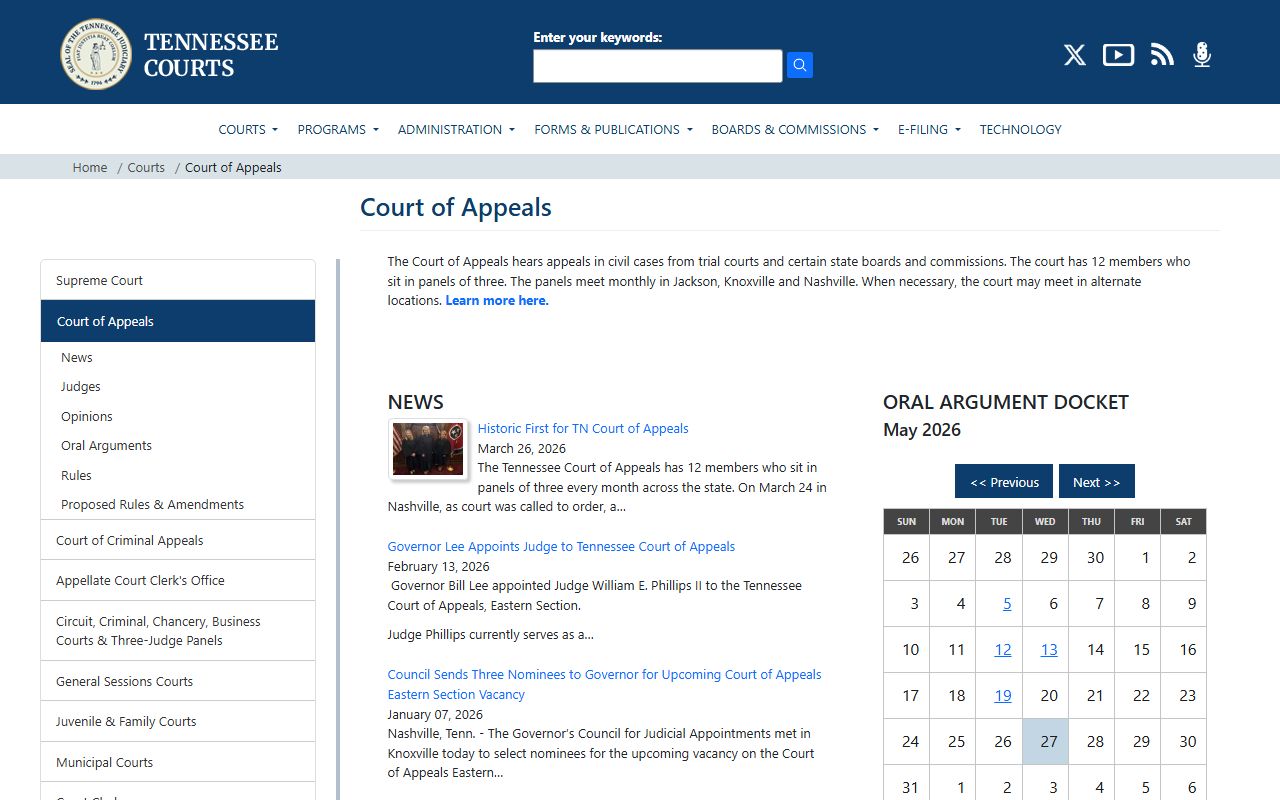
Civil appeals from Williamson County go to the Tennessee Court of Appeals. Civil rights issues sometimes move through the civil court track, so understanding the right court matters when seeking restoration or relief.
Common rights restoration questions break into a few buckets. Voting rights restoration in Tennessee depends on the conviction type, completion of the sentence, payment of cost requirements where they apply, and a certificate or restoration process under state law. Firearm rights involve federal and state law and can be restricted by both. Driver license reinstatement may require paying fees, completing classes, providing insurance proof, or completing other steps tied to the suspension reason. Anyone working through these should expect more than one office to be involved, and legal counsel can save time.
Note: Release from custody does not by itself restore voting or firearm rights; each restoration follows its own statute and process.
For the broader court-records and inmate context, see the court records page, the inmate records page, and the jail population page.