
How to Search Williamson County Traffic Court Records
The first step is the citation itself. The ticket names the court, and that court holds the record. If the citation came from the Williamson County Sheriff's Office or county deputies, the case is likely in General Sessions Court. If it came from a city police department, it is probably in that city's municipal court. No single countywide public citation lookup was located, so you contact the court named on the ticket.
Have your details ready before you call or visit. You will want the citation number, the name on the ticket, the violation date, and the court date if one is listed. With those in hand, the clerk can confirm the case status, the amount owed, and your options. Reading the ticket carefully solves most of the confusion before it starts.
Which Courts Handle Traffic Cases in Williamson County
Traffic jurisdiction splits between the county and the cities. County-level traffic and misdemeanor citations generally route to General Sessions Court at the Judicial Center in Franklin. City ordinance and municipal traffic citations route to a city court, such as Franklin, Brentwood, Fairview, Nolensville, Spring Hill, or Thompson's Station, depending on the issuing agency.
The state confirms this split. The Tennessee Administrative Office of the Courts states that municipal courts handle traffic cases and city-ordinance violations, and that the municipal court clerk is the right contact for those questions. So do not assume a city ticket sits in the county General Sessions system. Match the agency on the citation to the court, and you will reach the right clerk the first time. For General Sessions matters, the court dockets page covers how those fast-moving dockets work.
Types of Traffic Cases on Record
Traffic cases cover a wide range, from a simple speeding ticket to a serious criminal charge. Most are handled as citations with a court date or a payment option. Some, like driving on a revoked license or reckless driving, are criminal and carry bigger consequences. Tennessee's traffic and vehicle laws sit in Title 55 of the state code.
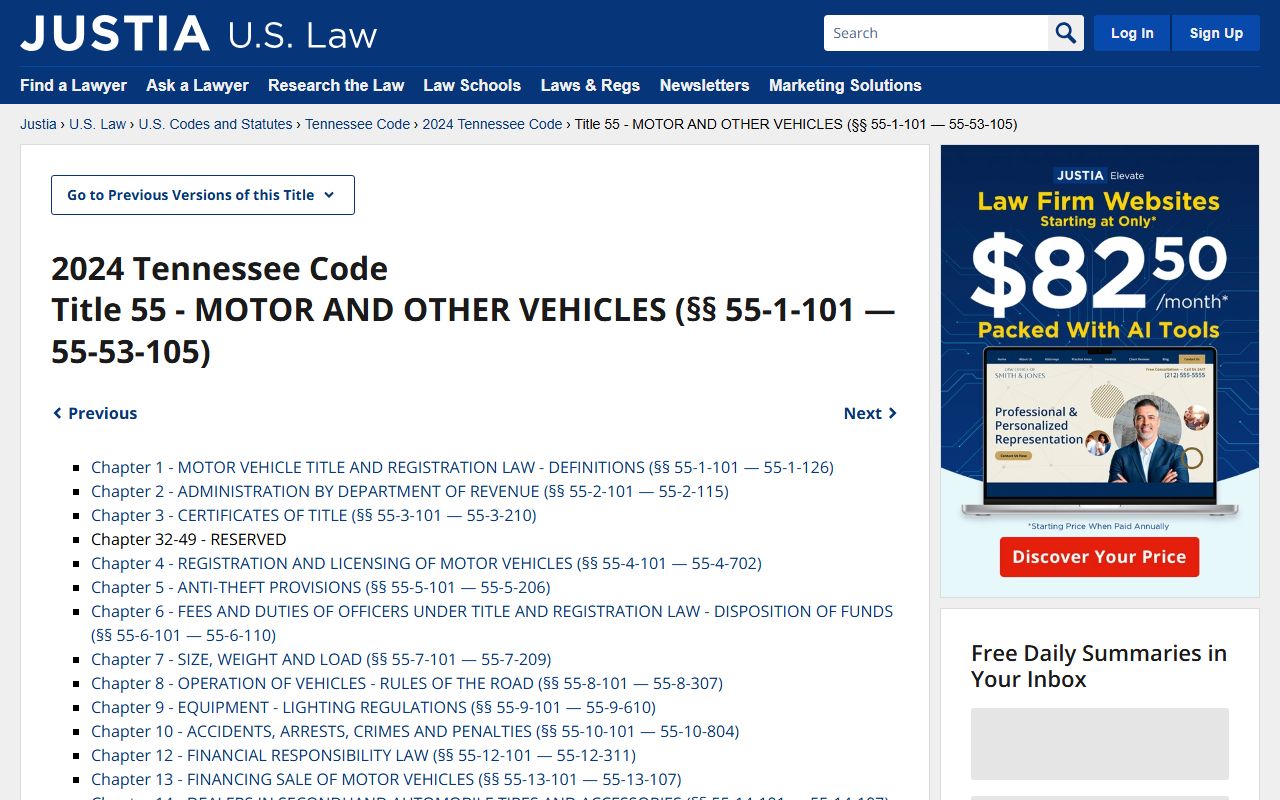
You can review the traffic provisions in Tennessee Code Title 55. Common case types include moving violations, equipment violations, registration and insurance issues, and criminal traffic offenses. A DUI is criminal and is not a payable ticket, which the section below covers.
What Williamson County Traffic Court Records Show
A traffic court record holds the case detail from citation through disposition. The fields are fairly standard across courts. They identify the driver, the violation, the court, and the outcome. The table below lists the fields you are likely to see on a typical traffic case.
| Field | What It Shows |
|---|---|
| Citation Number | The ticket or case identifier; cite it in every request. |
| Issuing Agency | The sheriff, a city police department, or another agency. |
| Charge | The statute or ordinance and a description of the violation. |
| Court and Court Date | The court handling the case and the scheduled date. |
| Disposition | Paid, dismissed, amended, guilty, not guilty, or diversion. |
| Fines and Costs | The fine, court costs, and any late fees owed. |
A record may also show a failure-to-appear action, a warrant or capias if the case escalated, and whether a conviction was reported to the state. The court records page covers how to request copies of any of these.
Searching by Citation Number vs by Name
There are two common ways to find a traffic case: by citation number and by name. The citation number is the most precise, because it points to one ticket. A name search is broader and can return more than one result, especially for a common name. Either way, the search happens through the court that holds the case, since no open countywide citation portal was located.
When you call or visit the clerk, lead with the citation number if you have it. If you only have a name, add the violation date and a date of birth to narrow the results. For city tickets, the municipal court clerk runs the same kind of lookup for its own cases. Keep the citation in a safe place, because that number saves time at every step.
Paying or Contesting a Williamson County Traffic Ticket
You have choices with a traffic ticket, but the choice you make has consequences. Paying a ticket is often treated as a guilty or no-contest resolution, which can put a conviction on your driver record. Contesting it means appearing on the court date or following the clerk's plea instructions. If you want traffic school or a dismissal by compliance, ask before you pay, not after.
- Read the citation for the court name and the court date.
- Confirm whether it is county General Sessions or a municipal court.
- Use only the official court or the payment vendor that court links.
- Understand whether paying counts as a guilty plea and a conviction.
- To contest, appear on the court date or follow the clerk's not-guilty process.
- Ask about traffic school or diversion before paying if you want to avoid points.
- If you miss court or cannot pay, contact the clerk quickly before a warrant or license action follows.
A missed contested date can be worse than a late payment, because criminal traffic matters can lead to a capias. Rescheduling must be requested before the date, and a voicemail may not count as a continuance.
Public Access Laws for Traffic Court Records
Traffic court records follow the same access framework as other court records. Tennessee Supreme Court Rule 34 governs public access to court records, and the Tennessee Public Records Act covers county administrative records. A traffic docket can be public while certain attached material is restricted. Clerks may charge for copies under state law.
For a county traffic case, the General Sessions clerk is the custodian. For a city case, the municipal court clerk holds the record. The public records page explains the broader access rules, and the distinction between inspecting a record and buying a copy applies to traffic files just like any other court record.
Court Traffic Records vs State Driver Records
This is the distinction that trips up the most people. A court traffic record and a state driver record are two separate files kept by two separate agencies. The court keeps the case. The Tennessee Department of Safety and Homeland Security keeps the driver record. A ticket can sit in the court file long before, or even without, a change to your driver record.

The state handles driver records and reinstatement through Tennessee Driver Services Online. The comparison below shows how the two records differ.
| Point | Court Traffic Record | State Driver Record |
|---|---|---|
| Kept by | The court and clerk | Department of Safety and Homeland Security |
| Shows | Citation, charge, court date, plea, disposition, fines | License status, reported convictions, suspensions |
| Where to access | General Sessions or municipal court clerk | Driver Services Online with identity verification |
| How to correct errors | Through the court that holds the case | Through the state driver-record process |
A dismissed citation may stay in the court file even if it never becomes a driver-record conviction. A license suspension can also remain at the state level after the court case is paid if reinstatement steps are not finished.
CDL and Commercial Driver Records
Commercial drivers face stricter rules. A commercial driver license, or CDL, carries reporting requirements that ordinary licenses do not. Many states limit the masking or deferral options for CDL holders, so an outcome that protects a regular driver may not help a commercial one. The stakes are high because a CDL conviction can affect a person's job.
If you hold a CDL, ask the court specifically about commercial-driver reporting before you resolve a ticket. Do not assume that traffic school or diversion will keep a violation off your commercial record. The safe move is to confirm the CDL-specific consequences with the clerk, and with an attorney when the charge is serious.
DUI and DWI Cases
A DUI is a criminal case, not a payable traffic ticket. It carries possible jail time, license consequences, and a criminal record. It should never be treated like a speeding citation you can pay online and forget. These cases move through the criminal side of the court and often involve a bond and multiple hearings.
Because a DUI is criminal, it connects to arrest and criminal court records rather than simple traffic payment. The arrest records page covers booking and criminal case paths, and anyone facing a DUI should get legal counsel rather than rely on a payment portal.
Deferred Adjudication and Defensive Driving
Some drivers can avoid a conviction through options like traffic school or a court-approved deferral. A defensive driving course or a compliance dismissal may keep points off a record or lead to a dismissal, but these are not automatic. They depend on the offense, the court, and your driving history, and the court must approve them.
Ask about these options before you pay, because paying first usually closes the door on them. Bring proof of completion by any deadline the court sets, since a missed deadline can undo the benefit. Compliance dismissals, such as fixing equipment or showing insurance, may still carry court costs even when the charge is dropped.
Sealing or Expunging Traffic Records
Whether a traffic matter can be expunged depends on the charge and the outcome. Dismissals, certain diversion outcomes, and some eligible matters may qualify under Tennessee expunction law, while a standard conviction may not. Criminal traffic offenses follow the criminal expunction rules rather than a simple records cleanup.
Eligibility is specific, so check the statute, the clerk process, and legal counsel before assuming a record can be cleared. The arrest records page covers expunction and the difference between sealed and expunged records in more detail.
Fees for Traffic Record Copies
Court clerks may charge for copies of traffic records and for the labor to produce them. State law allows reasonable charges, but the exact amounts come from each court's current schedule. A current Williamson County traffic fee table was not located in the sources reviewed, so confirm amounts with the clerk before you order.
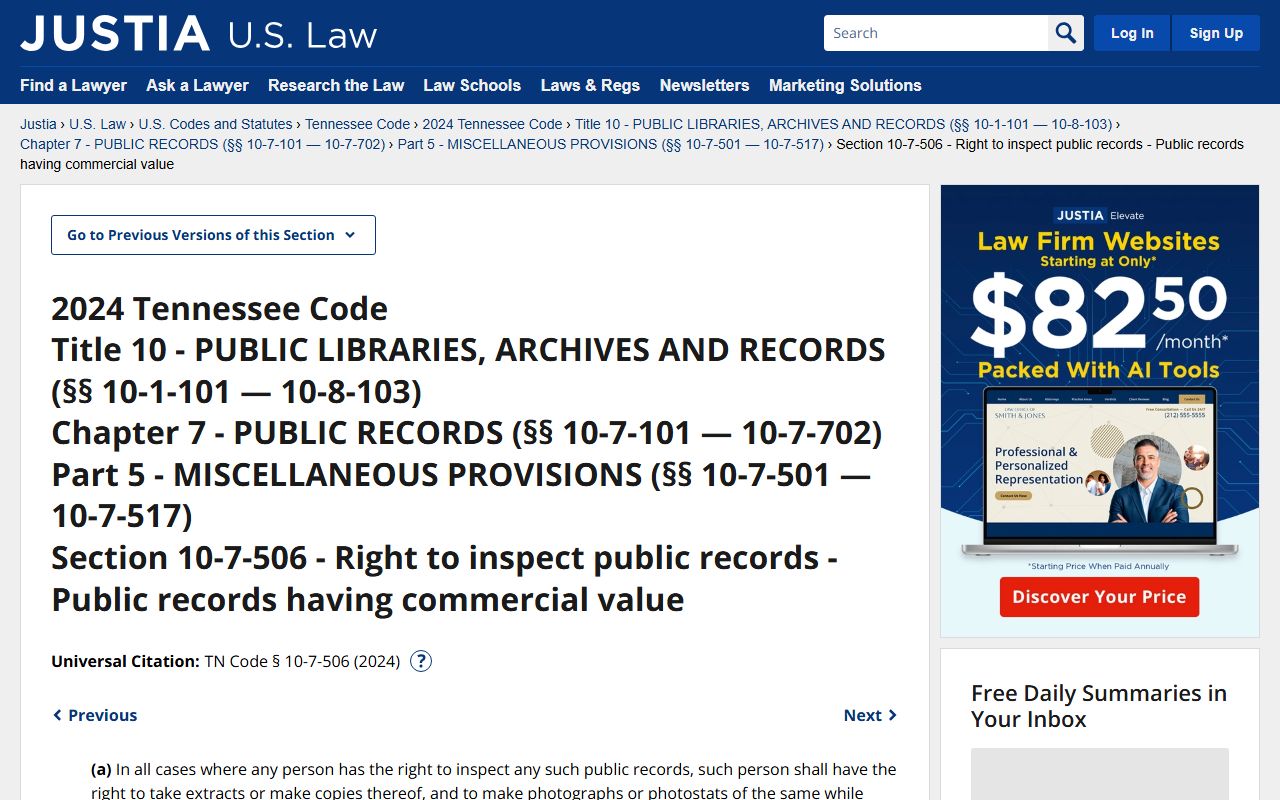
The fee authority sits in Tennessee Code § 10-7-506. The table lists the common copy fee types rather than invented prices.
| Item | What It Covers |
|---|---|
| Plain copy | An uncertified copy of a traffic case document. |
| Certified copy | A clerk-certified copy for legal or official use. |
| Record search | Possible charge for staff time on older or archived files. |
Note: The fine and court costs on a ticket are separate from copy fees, so paying a ticket is not the same as buying a copy of the record.